
Maxence Druelle Fourniez, tells the story of his great aunt ‘Marine Fourniez’
The French resistance called her ‘Agnes’
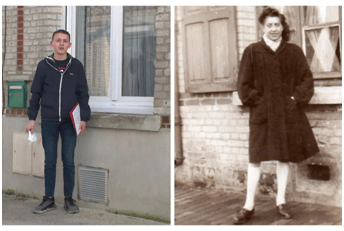
Many years apart but together in spirit.
My young French friend ‘Maxence Druelle Fourniez’ is the great-nephew of resistance member ‘Marine Fourniez’
Maxence achieved his ambition on 22nd February 2021 to have ‘Marine Fourniez’s work with the resistance recognized, he has particularly concentrated his efforts towards a street in her name.
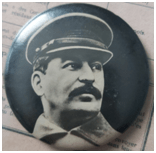
Marine was born to David and Angele Fourniez on the 12th February 1921 in Labuissiere in the Pas de Calais region. The small family lived in a settlement (minors house) in the village of Wingles near Lens. She was born into a working-class environment in the land of the mines, her family and herself were staunch Communists. The young woman wore a medallion which bore the image of Stalin and it accompanied her everywhere.
At the end of 1942, Marine, then aged twenty-one went to work, without suspecting that the day would change her life.
She was an assembly line worker in the city’s oil and gas plant and on that day the top of her head and her hair get caught in the tube-filling machine, inflicting a wound on her that would eventually lead to her early death. She knew that her illness could not be cured and that it would gradually get worse. So having no husband or children, Marine decided to join the Resistance. The resistance gave her a code name and she operated under the alias of ‘Agnes’
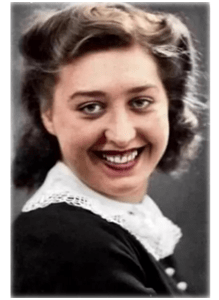
At the age of twenty-two she became a liaison officer, registration number 231,of the 2nd battalion and part of the 3rd company within the FTPF, the Front National, and within the FFI, but she was also a part of section 3, registration number 162, sector 2 within the Patriotic Militias of Pas-de-Calais.
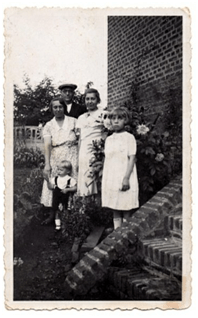
From 1943 and until the Liberation she will carry letters, orders, leaflets, newspapers, dynamite, guns and grenades, within the Lens sector, all these dangerous operations would result in her capture and ultimately her death should she be discovered and that was to come close more than once.
In 1943, as usual, she went to Lens station. A friend gave her some suitcases, which she collected before boarding onto a train. To her shock and amazement the wagon is swarming with German soldiers and officers. The Germans had noticed her joining the carriage so it is too late to turn around. She takes her courage and both suitcases in her hands, she keeps her cool, and decides to stay on this train at all costs, in company of these German soldiers and officers.
Suddenly, a German officer walks towards her, and grabs her suitcases. Luckily, the officer is not suspicious of their contents and is only intending to help her and put them in the luggage rack. Marine is relieved to see that her suitcases, full of dynamite, did not burst open when slung up onto the rack.
However, the continued travelling back and forth of this young woman between Lens, and Wingles did not escape the attention of the Gestapo. One day like so many others, as she passed the Lens station to retrieve briefcases full of dynamite and grenades, she felt she was being followed. She boarded the train and headed for Wingles, whilst on the train she realized and confirmed that she is indeed being followed by two men.
When she gets off the train, the two men do the same. Marine rushes home, and tells her father to hide the briefcases because the Germans are coming! David Fourniez (her father) seizes them, removes the weapons and grenades, and puts the weapons in the fire, without lighting it.
Two minutes later, two Gestapo agents arrive in the house. They are there to search it from top to bottom, convinced, (and they are not wrong), that they will find evidence of resistant activity.
If they see the cache of guns and weapons it’s done for the whole family. David then creates a diversion: he grabs the two suitcases, which were now duly filled with bread and food, and shouts in broken French so that the Germans understand:
“In the suitcases are bread and food, cold house, must light fire”.
Then, with the help of Marine, David hastens to light the fire in which the weapons and grenades are still located. Nothing explodes.
The Gestapo agents continue to search, finding nothing, annoyed at finding nothing, they leave empty-handed. As soon as the door is closed, Marine and David rush back towards the fire and extinguish it as best they can, burning their hands in the process.
The loot is saved, as are their lives and those of the rest of the family. Weapons and grenades do not join the ranks of valiant comrades. Marine multiplied the perilous missions, going so far as to sit down, with a basket full of grenades, next to a German soldier, who luckily did not notice she was carried death in her briefcase.
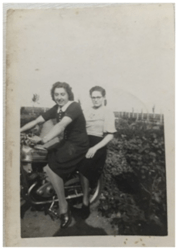
Risking her life she seemed to prefer losing it by fighting the Germans than by her deteriating health, Marine continues to make the return trip hundreds of times between Lens, Wingles and Billy-Berclau, these towns are separated by about twenty kilometers, the journey was also often made on foot or by motorbike, sometimes even defying the curfew to transport weapons, grenades, leaflets and dynamite. She and her father had even transformed the septic tank of their house into a hidden, converted storage place. They stored weapons, dynamite and grenades there. The house and, more precisely, its attic is transformed into a real fortress. So successful was their hiding place, in order to find the weapons, leaflets, orders, dynamite and grenades, the house would have to be demolished,.
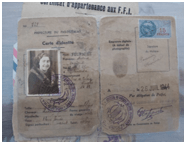
Marine’s work at the chemical and hydrocarbon plant also allowed her to benefit from privileges. The Germans could not have imagined that a sick young woman would pose such a great threat to their occupation of France..
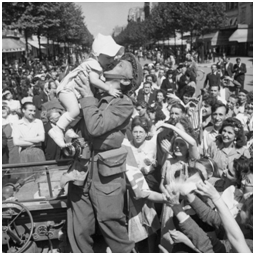
The day then came when the Resistance and the British liberated Wingles and that day was September 2, 1944, Euphoria and joy sounded over the Wingles.
However Marine, her father David and their close comrades became very critical of the violence issued out by some of the resistance fighters of the 25th against those believed to have been collaborators’.
Marines’ health continued to fail and Marine passed away on 15th March 1947. Her illness, had been long and arduous but had ultimately won the day,
This young soul of the Resistance had endured a long fight, waged not only with the Germans but also her condition had finally succumbed from poor health. Her courage with her illness still showed through with as much fervor as her resistance struggle.
Such bravery from the one they called ‘Agnes’
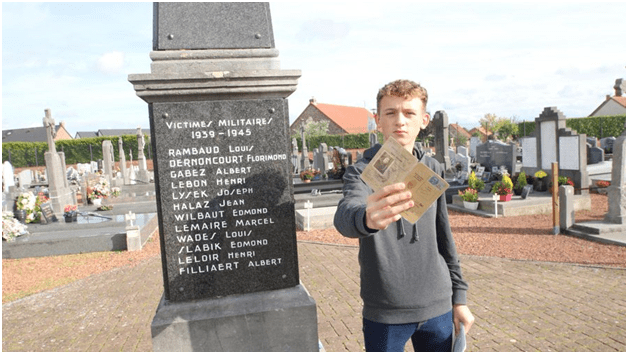
Marine lies close by.


 ONLYVFR
Leave a reply to onlyvfr Cancel reply