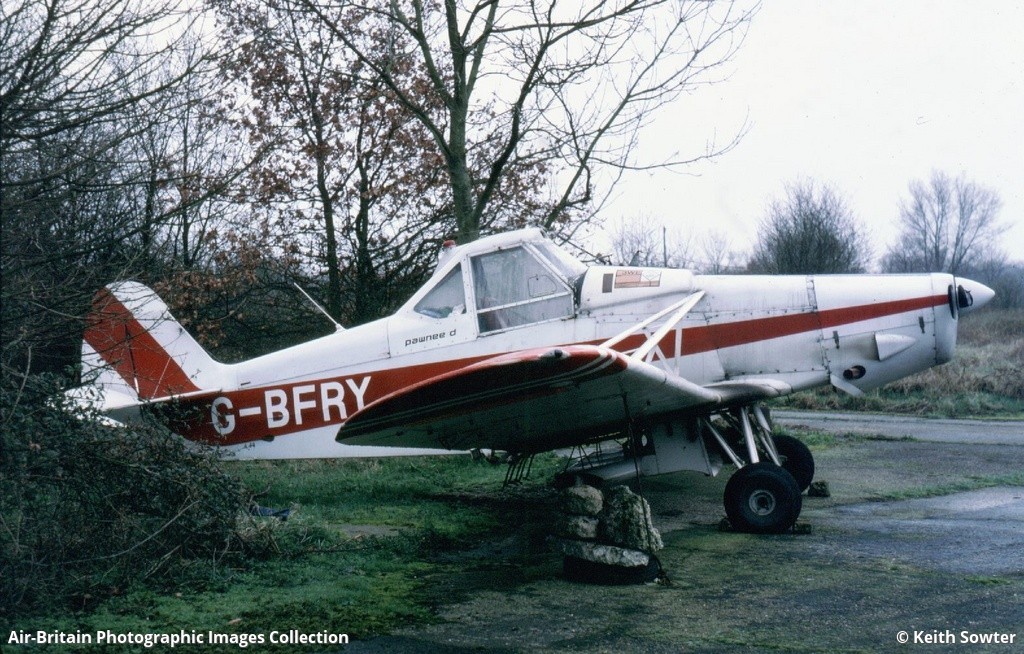
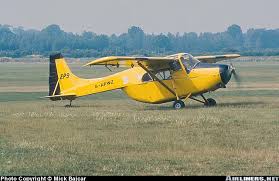
The Piper Pawnee is a single seater crop spraying aircraft. Firstly I must say I have never operated as a crop sprayer pilot, but I did do ground handling for Jim Pearce’s crop spraying company out of Shoreham Airfield in the 1980’s. Mainly loading the hopper as he operated around Sussex, but also flying the backup aircraft on what was called dead leg flights between farmers fields. That backup aircraft was an Edgar Percival EP9 Prospector.
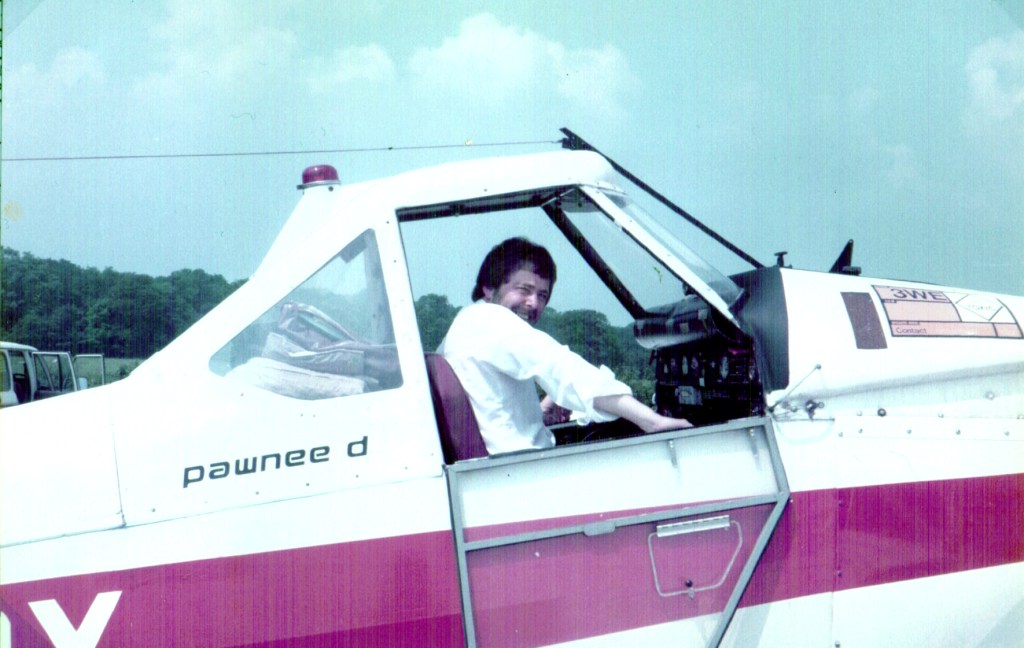
It was on June 15th 1984, according to my log book that I was offered the chance to fly the Pawnee. Flying a single seater for the first time is always an exciting experience. You can be shown around the cockpit by the experienced pilot and then sit there on your own ensuring you know where all the dials, taps, fuel cocks, flaps and brakes are. Then comes the starting procedure, which I have found is different in each aircraft I have ever flown. Once the engine is up and running you are on your own and you just have to go and fly it.
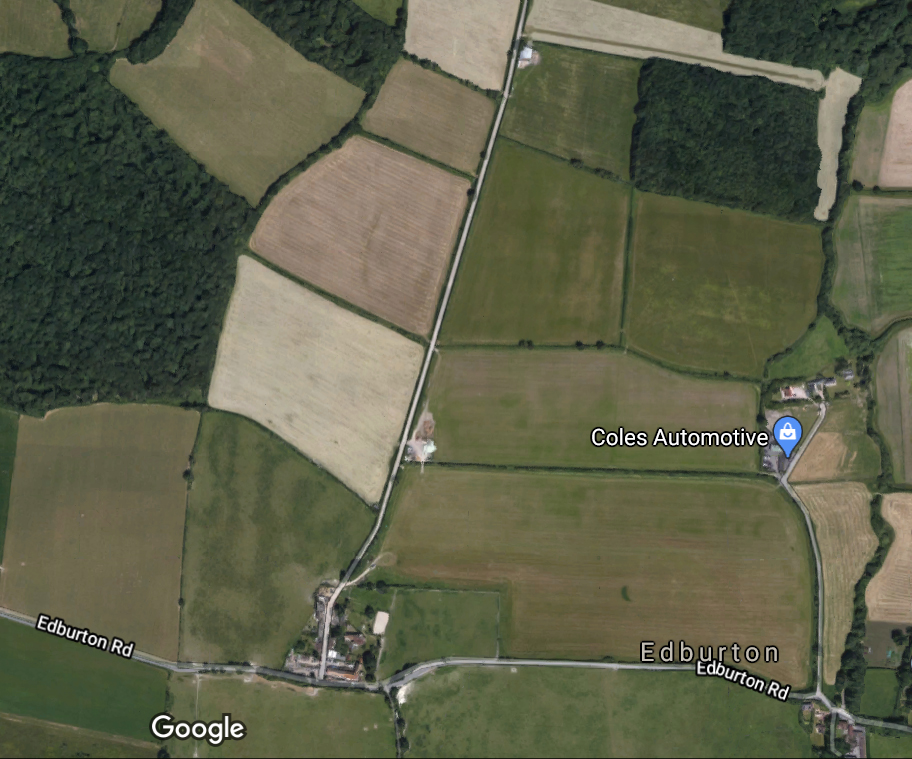
On this particular day the Pawnee was parked in a private landing strip at Edburton in Sussex which lies under Truleigh Hill. The Edburton farm was at that time owned by Robin Windace and the whole estate was within a tranquil area just to the north of the rolling hills of the south downs.
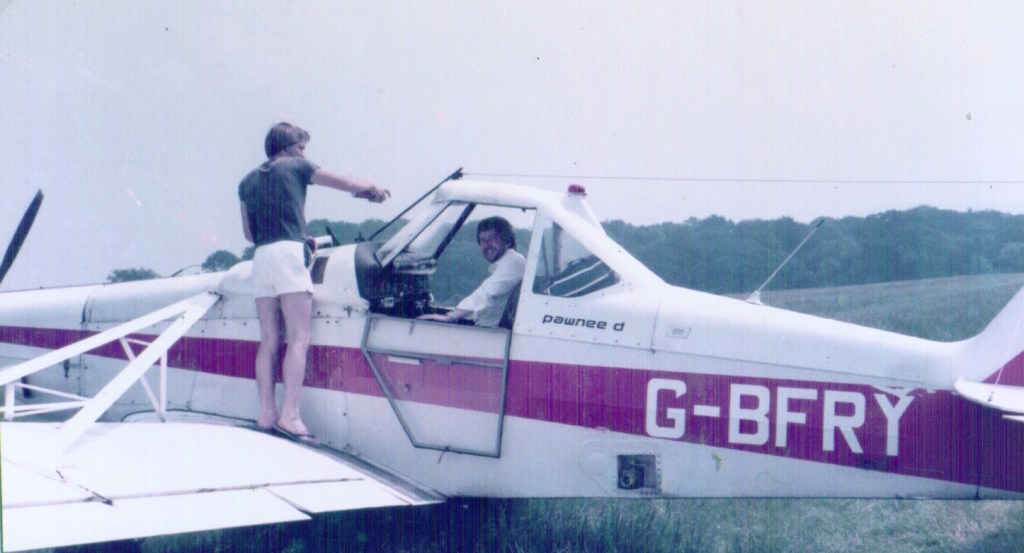
I had spent the morning working out a flight plan because my task was not just to fly it for the first time, but to take it to Shipdham Airfield in Norfolk. The flight would also involve me making my first landing at Earls Colne, an airfield in Suffolk. There would be no fuel available at Earls Colne so I needed to carry two 5 gallon cans in the hopper and fill the tanks again in order to get to Shipdham.
The Pawnee had no radio and no real navigational equipment apart from the conventional old mickey mouse compass. So a good amount of pre flight planning done on a VFR aeronautical map with a reliable watch was needed. In 1985 GPS was not available as it is today. In fact it was only in 1983 that GPS, a military system was made available to civilians.
In 1983, Korean Air Lines Flight 007 entered Soviet airspace after a navigation error and was shot down, killing all 269 passengers. This incident resulted in President Ronald Reagan ordering the Unites States military to make the Global Positioning System (GPS) available for civilian use so that similar incidents could be avoided in the future.
So my flight would be made by dead reckoning, dead reckoning is the process of calculating the current position of an aircraft by using a previous known position, then estimating your airspeed, the winds aloft, your heading and track over an elapsed time.
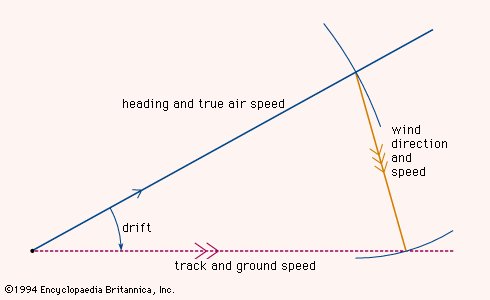
The aircraft’s compass heading and airspeed are represented as one vector (solid blue line) and the wind direction and speed as another vector (brown line). The sum of the two is a third vector (dashed line) representing the craft’s actual track and speed over the ground. The difference between the air vector and the ground vector is the drift caused by the wind.
So in a nut shell, with a carefully drawn route on a map and a good time piece it is a perfectly simple means of making your way across country. I love this type of flying and for years I refused to use GPS. Fortunately for some it is now available in almost every aircraft and a pilots use of basic navigation has been almost eliminated.
I fear that this fact is the one downfall of GPS, for if a pilot does not keep an eye on the ground and then loses the GPS signal or electrics, they have little or nothing to revert back to.
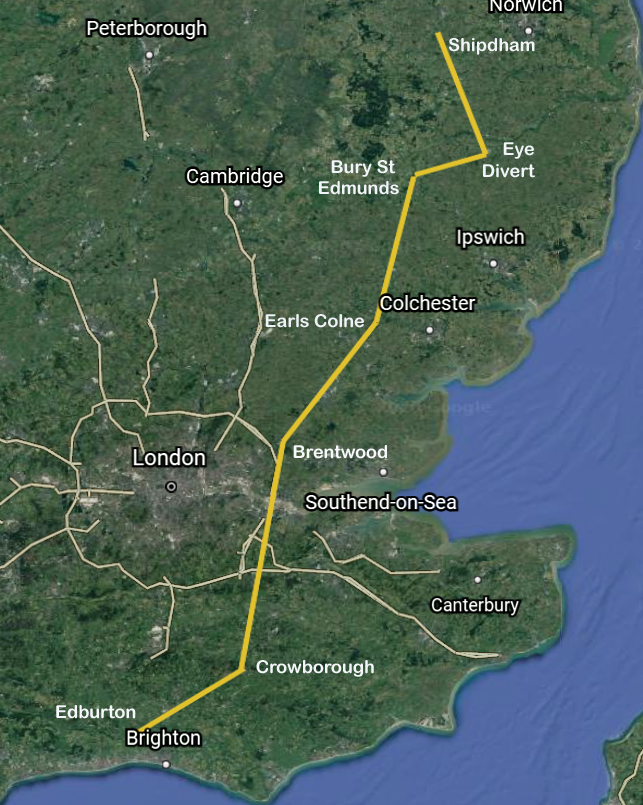
So my preflight planning was meticulously laid out taking into account that I had to stay away from any controlled airspace and there was plenty of that about even in 1985. But also there was no airfield along my planned track who had fuel available, hence the requirement to carry the two five gallon cans in the hopper. This then bought about the fact that my first landing in the Pawnee would take place at Earls Colne, east of Stanstead Airport. The route I flew can be seen on the map shown below.
With the engine started and warmed up for takeoff I proceeded to the western end of the take off area of Edburton, lined up to depart between the line of trees at the eastern end, I crossed my fingers and applied the throttle. The Pawnee had no vices at all and was extremely easy to hold a centreline across the ground during the takeoff roll, once airborne it was also easy to hold a good climb speed even though the aircraft has a very low nose down attitude. That fact of course was built in with the design as it was after all a crop sprayer and its normal operation was to fly just a few feet above ground level, forward vision was therefore very important.
That fact of low flying gave me some artistic licence in my flight that day. The registration G-BFRY was registered in police records as a crop sprayer and this meant that any complaints about low flying would be disqualified immediately as the aircraft was a known quantity.
Once out of Edburton I flew north east to Crowborough then made a turn to the north which would take me up to the river Thames and cross alongside the Queen Elizabeth Bridge. Continuing on that heading to Brentwood and then turning north by northeast towards Earls Colne. My logbook shows this leg of the flight to have taken 1 hour. The weather was good so far with clear skies, known in aviation terms as CAVOK ( Ceiling and vision Ok)
Now I had to see how good the landing was going to be, backed up by the saying any landing is a good one, if you can walk away from it.
I set up the approach making note of the speed and then looking at the attitude of the nose which still looked unnaturally low compared with other aircraft I had known and flown before. But again this aircraft was a real pussy cat and my confidence grew with the lovely and very practical Pawnee.
I vacated the runway after landing, obviously I had not spoken to anyone as I had no radio but I had gained prior approval before taking off at Edburton. In fact the airfield appeared totally deserted, or so it seemed, as all the time I was there I did not see a single person. I shut down the Pawnee and climbed out, lifting the hopper cover I pulled out the two five gallon cans and the large funnel which was covered with a Chamois leather to prevent any debris entering the tanks in the wings of the aircraft as I topped them up from the cans.
So feeling a bit like no mates Nigel I replaced the empty cans into the hopper and climbed back into the Pawnee. The expected flight time from Earls Colne to Shipdham was approximately 1hr.15 min. There were no mobile phones in those days so I could not report my departure time to Jim or Shipdham. I just had to start the Pawnee up again and get on with it.
Mobile phones were not widely available until the mid 1980s. Motorola, on 3 April 1973 were the first company to mass produce a handheld mobile phone. These early mobile phones are often referred to as 0G mobile phones, or Zero Generation mobile phones. Most phones today rely on 3G or 4G mobile technology.
Departing Earls Colne, I set a heading again of north by north east. This would place me west of RAF Wattisham and east of the town of Bury St Edmunds. Bury St Edmunds is at the extreme south east corner of a group of USAF Airbases. They are capable of extreme aerial activity as the area contains Mildenhall, Lakenheath and Honington. Entering any of those US Airforce bases without a radio is certainly against rules of the air and dangerous if uninvited. They just might shoot first then ask questions.
It was at this point that the weather in East Anglia started to act up, I could see that off to my left was a rather large squall, known locally as thunder bumps, they are frequently active and tend to build up during the afternoons of summer. This posed a problem as I could not possible out run it and go in front of it, equally I could not go around the back of it as that would take me into those US Airfields mentioned before.
The third option was also out of the equation, this was to return to Earls Colne. If I returned to Earls Colne I would no longer have the fuel to make the journey up to Shipdham, so what to do.
Option number four. Of course I am in a crop sprayer and they are seen to operate and land almost anywhere. I looked at the map and off to my right and to the east of me was a disused WW2 airfield RAF Eye, It had been built by the US 8th Air Force in 1944. but had now reverted to farmland and light industrial buildings. But a runway was still very much evident, so EYE it was and sit out the rolling thunder bump which was progressively making its way north east towards Norwich.
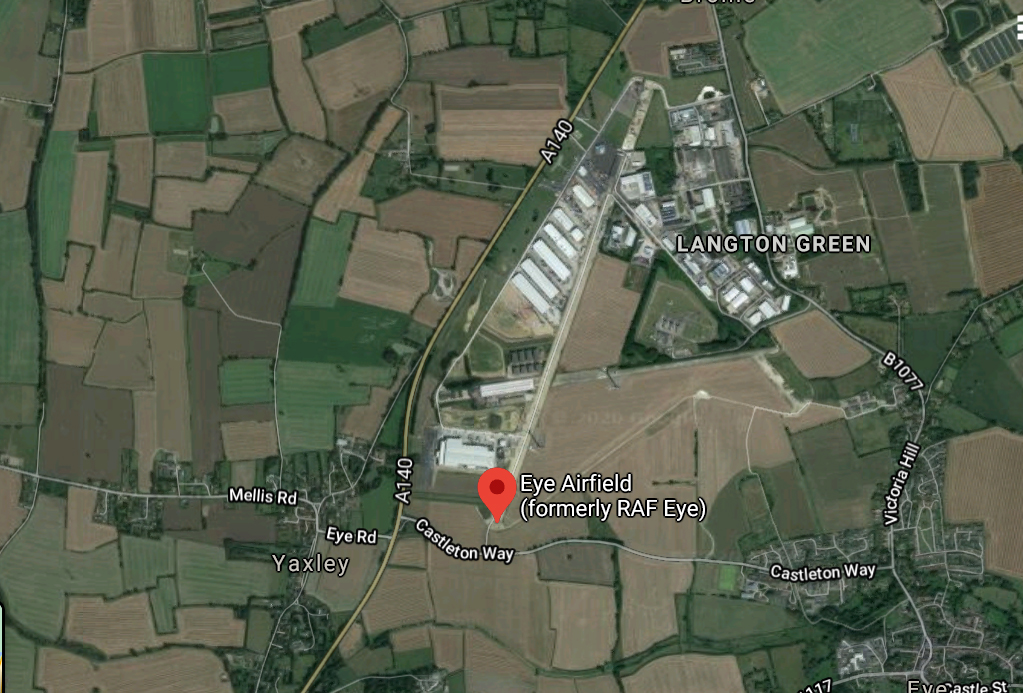
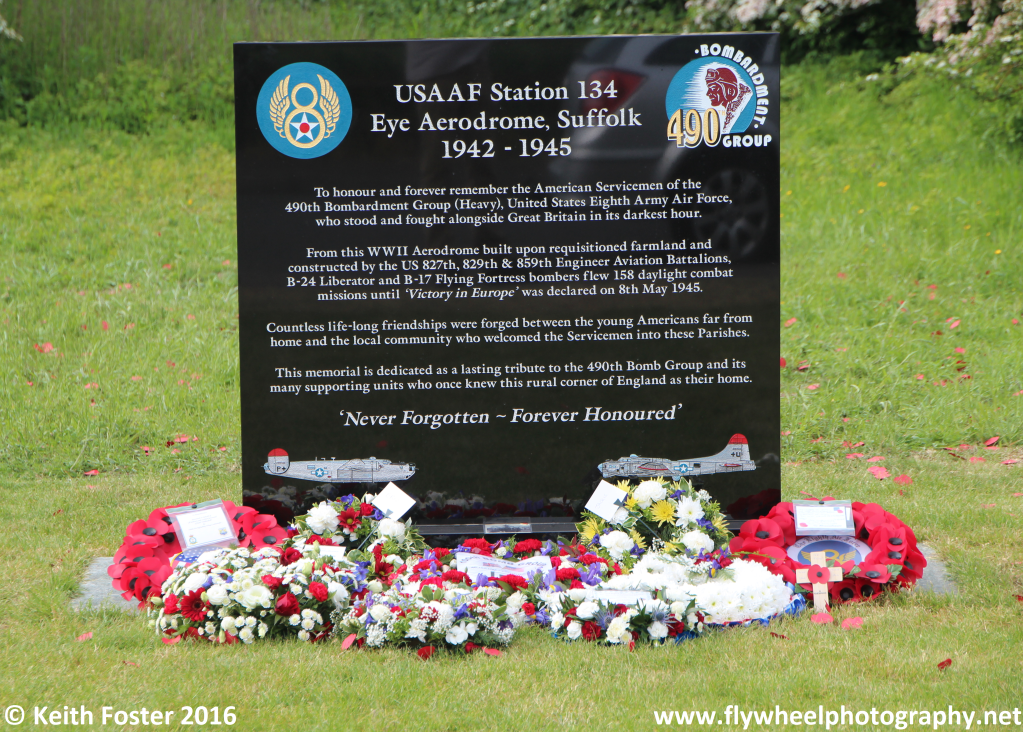
The airfield of Eye was opened on 1 May 1944 and was used by the the 490th Bombardment Group flying at first B-24 Liberators, but the 490th later converted to B17 Flying Fortresses. RAF Eye was one of the last wartime airfields to be built in the area and some of the equipment used in its construction remained for many years after the war. Eye was then transferred to RAF Bomber Command on 1st November 1945 as an active station. However the airfield was gradually run down and was finally sold by the Air Ministry during 1962-63. With the end of military control, Eye airfield was converted into an industrial estate with a large factory for processing straw, this being established in the hangars. Many of the old taxiways and one runway remain, along with a T-2 hangar and other wartime buildings in various states of repair and use.
A memorial dedicated to those who served with the 490th Bombardment Group during World War II was unveiled on 29 May 2016.
I approached the field from the south, the runway looked in good order and far, far longer than I would ever need. I touched down and parked the Pawnee to one side to sit out the weather which was still north of my position.
It took about five minutes before a figure appeared out of the tall crop of sweet corn, it was like something out of an American B Movie. The figure walked toward me and I climbed down to meet him. “This do be disused” he said. I explained why I had chosen to land and he was obviously aware of the storm to the north. He didn’t mind at all, in fact he was intrigued and tapped the wing saying, “This do be fabric” We entered a conversation about the Airfields history of which he knew about and had indeed been farming on this landing during the war.
Whilst we were in conversation a Large articulated truck came up the runway, it turned around and the driver stopped to also come over and chat. It turned out that the runway was now used for heavy goods driving training. I apologised and tried to ensure them that I would not maneuver or take off whilst they were in the vicinity. “Oh no ” they said “please wait for us to come back as we want to see you take off” By that time I had been offered and was enjoying a large cup of tea out of a flask. Damn sight more than I got at Earls Colne.
The time came for me to depart as the squall had now moved sufficiently to allow me to pass behind the phenomena. Sure enough the Truck re-appeared. I said my good bye to the farmer and took off towards the north and the back edge of the storm cloud. The flight time to Shipdham was now about 25 minutes, as I flew nearer to the back end of that squall I was intrigued by its vertical black wall that was in front of me. I decided to just nudge a bit nearer and put my starboard wing into it. Amazing, I was in clear blue skies but feet away from me was weather that to a VFR pilot like me was an unnatural condition, if you decided to poke your nose into that it would probably be your downfall.
When I arrived at Shipdham no one was at all concerned by my late arrival, I phoned Jim to say all is well and he even sounded a little disappointed. Such is flying, if all goes well it is a non event. You need to make a story out of it, I hope I have.
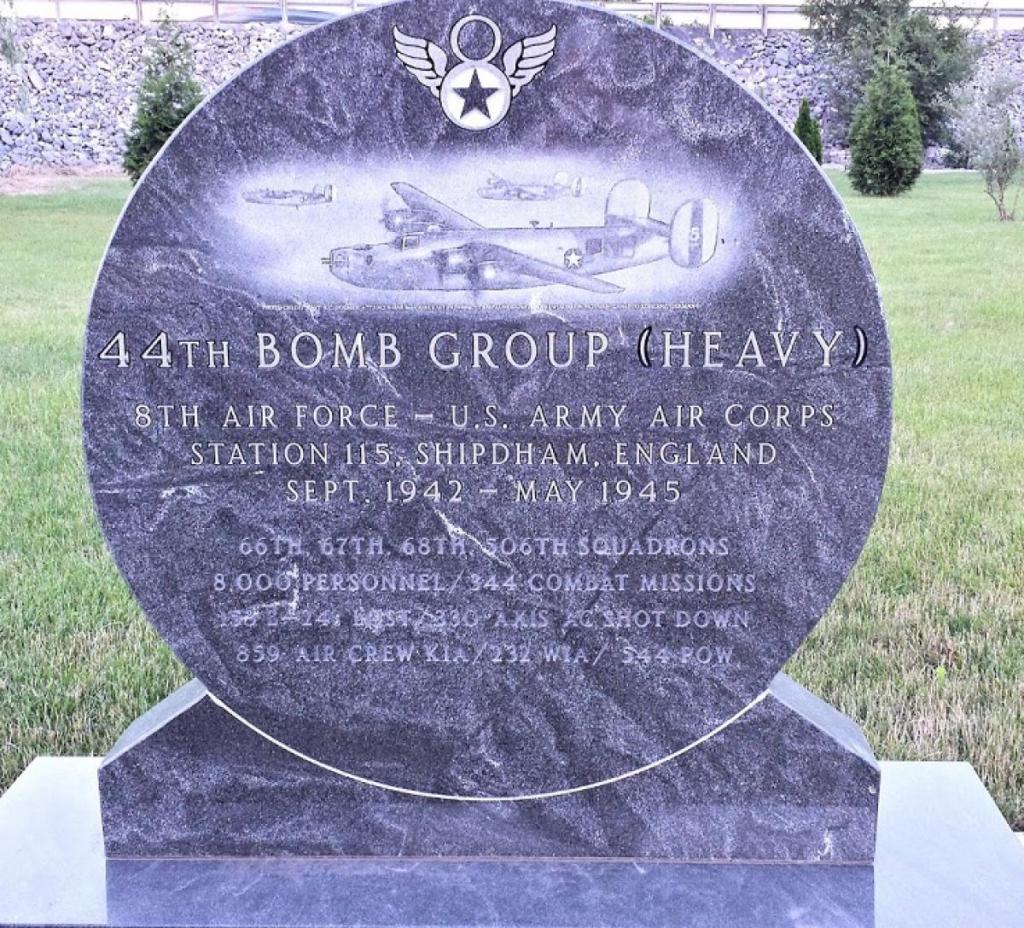
During WW2 Shipdham had also been home to the USAAC 8th Air Force, the 44th Bomb Group operating B24 Liberators, the 44th was known as “The Flying Eightballs”
Three days later I reversed the trip and took the Pawnee back to Goodwood.
I only flew the Pawnee one more time, it was in September of 1985. A short trip from what is now the Washington airstrip alongside the A24, north of Worthing. This was before the airstrip actually had a runway and I departed from the top Northern edge down the hill and away to the south over North Farm. The flight that day took 30 minutes, even though Goodwood was only 15 minutes away. It was an extended flight and an enjoyable journey over the south downs at negligible feet.
Oh for the freedom of flying a registered crop sprayer aircraft.
Halcyon days.


 ONLYVFR
Leave a reply to onlyvfr Cancel reply