The Flight of the Two (supposed) Dutchmen.
A short story based on true events.
The wind had a particular bite in the hills above Shap Wells—a November cold that crept through uniforms, through gloves, through bone. Yet inside the hollow of the stacked winter logpile, two men lay still as foxes in their den, listening to the crunch of guard boots on frost-hardened ground.
Heinz Schnabel breathed shallowly. “One more patrol,” he whispered in German.
Beside him, Harry Wappler nodded, the darkness swallowing the gesture. “After that, we move.”
For a year they had been Luftwaffe officers, prisoners of His Majesty’s forces—held in a commandeered spa hotel where steam no longer rose from healing springs and laughter had long since evaporated. But both men had spent their lives in the air; the earth beneath their feet felt like a cage.
And cages, even British ones, were meant to be escaped.
The guards passed. Quiet returned.
The two men crawled from the logs, brushed sawdust from the Dutch uniforms they had stitched in secret, their homemade buttons glittering faintly like honest brass in the moonlight. Wappler adjusted his forged identity papers, folded with the precision of a man used to keeping flight logs.
“Ready?” he murmured.
Schnabel’s smile flashed—a fighter pilot’s smile, dangerous even in captivity. “Let’s go meet our train.”
They reached the fence, the wooden tools they’d carved working just well enough to prise apart the wire. Beyond lay the railway line. A freight train, straining up the steep Shap Bank, slowed to a crawl. The men jogged alongside the wagon, leapt, and vanished into the night.
By morning, they were in Carlisle—two officers among the town’s early stirrings, walking with the easy gait of men who belonged. They bought cinema tickets and sat among British airmen, bathed in the flickering silver glow while the projector rattled. Wappler even laughed at a joke on-screen, and for a moment, he thought: This might work.
When the film ended, the audience rose as one. Two “Dutch officers” walked out among them, unnoticed.
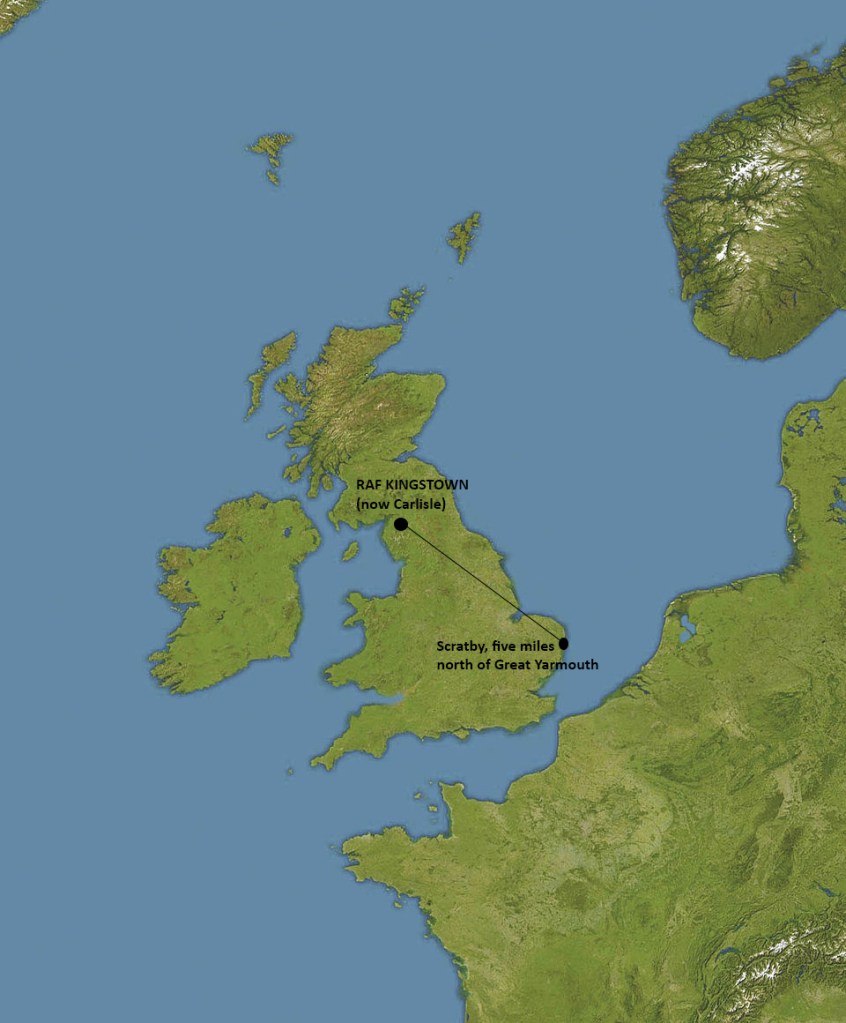
RAF Kingstown’s guard gate was just across town.
Schnabel stepped forward with all the quiet authority of a man who had once commanded squadrons. “Pilot Officer George David,” he announced, offering his forged papers. “We’ve been sent to inspect your training operations.”
The guard, young and cold and bored, barely looked up. “Right, sir. Straight through.”
Inside the perimeter, the two Germans exhaled. It was almost too easy.
They hid through the night behind a hangar, shivering in their borrowed uniforms. Dawn peeled open the sky. Mechanics moved like ants on the tarmac, busy with the day’s training flights.
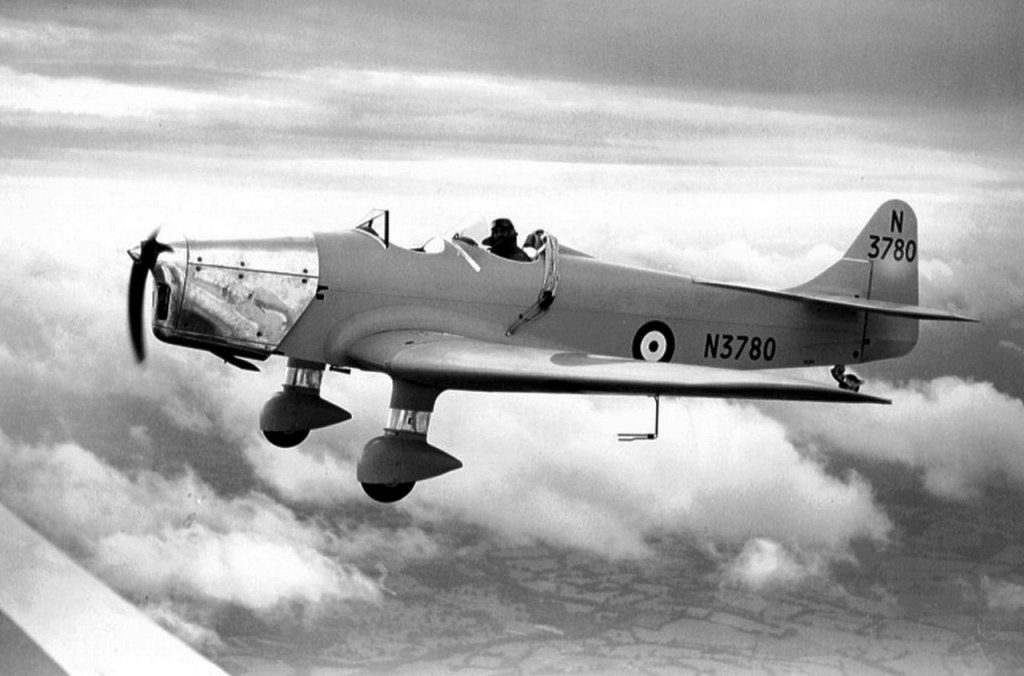
One Magister gleamed gold in the early sunlight—an open-cockpit trainer, its propeller stilled like a waiting promise.
Wappler adjusted his cap. “Your turn, Heinz.”
Schnabel approached a mechanic, clearing his throat. “Would you start her up, please? We have orders to take her out for airwork.”
The mechanic didn’t even blink. Another routine request from another officer.
The engine coughed, sputtered, then roared into life. The propeller spun. The mechanic stepped back.
The two “Dutchmen” climbed aboard.
Schnabel looked over at Wappler, eyes bright. “Shall we go home?”
Wappler grinned. “Let’s.”
The aircraft lifted cleanly into the morning sky, leaving RAF Kingstown shrinking behind them—leaving Britain shrinking behind them, too, if luck held.
For a time, hope hummed louder than the Magister’s engine.
The coast appeared beneath them. Beyond it, the North Sea stretched like a steel plate hammered flat. Somewhere past that lay occupied Holland—and safety.
Wappler tapped the fuel gauge. His face changed.
“Half a tank.”
Schnabel frowned. “Impossible. It should be full.”
“It isn’t.” Wappler’s voice dropped. “We’ll never make the coast of Europe.”
They circled silently for a moment. To ditch into the North Sea was to die. To turn back was to surrender. But a forced landing might buy them time.
Schnabel banked the aircraft inland.
“East it is.”
They came down in a meadow near the Norfolk coast, the Magister bumping over the grass and settling with a sigh. A figure approached—a police sergeant in a sturdy coat, suspicion softening into respect at the sight of the neatly dressed “Dutch officers.”
“Trouble, gentlemen?”
Fuel trouble, they explained. A simple matter. Could they telephone a nearby airfield?
Sergeant Fisk nodded obligingly. Wappler accompanied him to the station. Schnabel stayed behind with the plane and another constable.
Evening dimmed. A car arrived—RAF transport to take them to Horsham St. Faith. Officers welcomed them kindly, even gave them empty quarters for the night.
For a moment, Harry and Heinz believed they might still slip away.
But then, sometime after dark, a knock thundered against the door. Boots stormed in. Hands seized them both.
A radio broadcast had gone out across Britain that afternoon:
A Miles Magister has been stolen from RAF Kingstown. Two German prisoners of war suspected.
And so the game was up.
They were taken in irons. Schnabel stared out the lorry’s back window as the landscape jolted past.
“So close,” he murmured.
Wappler, shackled beside him, let out a breath that was half-laugh, half-sigh. “We stole an aircraft from under their noses. Flew halfway across the country. Fooled the police and the RAF.” He leaned back. “I’d say we did all right, Heinz.”
Schnabel chuckled. “They’ll never let us stay in England now.”
“No,” Wappler agreed. “Canada, most likely.”
The two men fell silent, as if listening to some distant echo of engines overhead.
For pilots, the sky was home. Even in defeat, they had tasted it again.
And for a few shining hours, they had soared—free men on a stolen sky.
 ONLYVFR
Leave a comment