
Richard A Spyer (1917-1941)
Acknowledgement to:
Kenneth G Wynn – Men of the Battle of Britain
Winston G Ramsay – Battle of Britain then and Now
The Battle of Britain London Monument – Web site
Tangmere Military Aviation Museum – Library
and Andy Saunders.
A Small Cog, A Big Story
You might say it’s only a small cog on a small block of wood — and you’d be right — but its story is far bigger than its size. I bought the little cog from a WW2 recovery enthusiast stall at a Biggin Hill Airshow back in the late 1980s.
The cog itself is actually a spur gear, once part of the oil scavenge pump inside a Rolls-Royce Merlin engine. Years would pass before I learned the story of the pilot and the aircraft — a story set during one of history’s most pivotal moments, the Battle of Britain.
The only identification on the block of wood reads:
“Hurricane, 607 Squadron, 5th October 1940.”
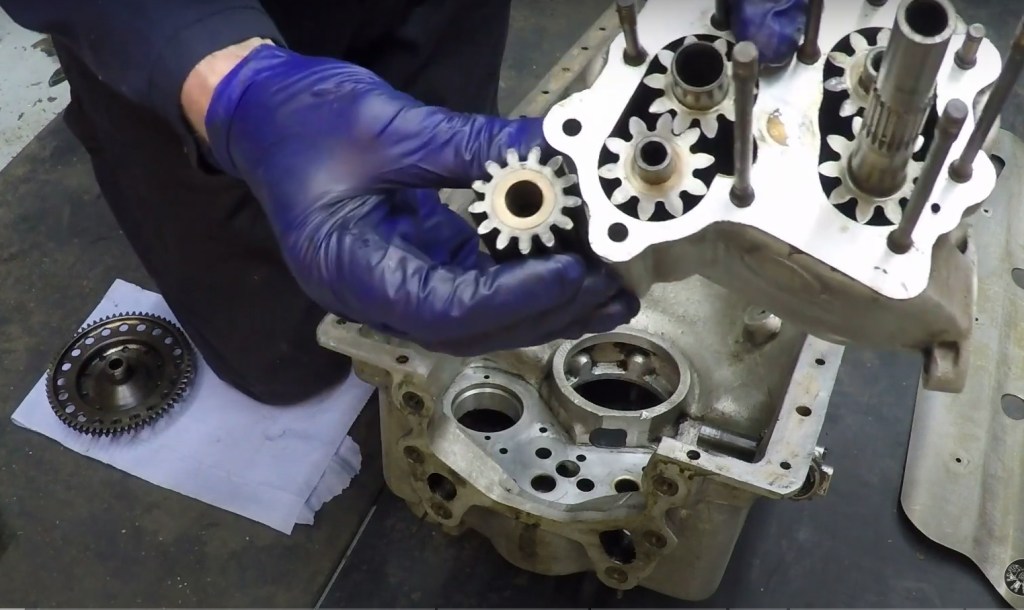
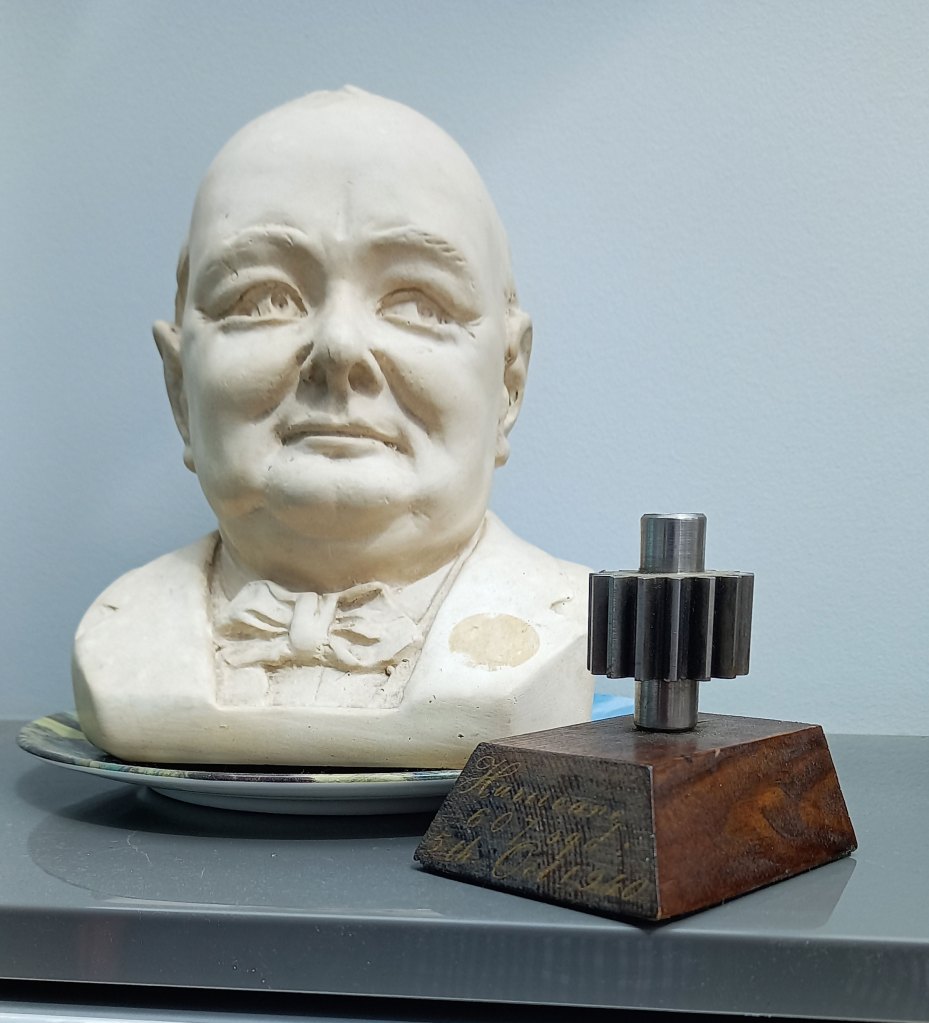
The spur gear within the oil scavenger pump shown here, is from a late model of Merlin, a (Merlin XX with 10 teeth). The spur in the engineers hand is from an early Merlin with 13 teeth. It matches my piece.
Hurricane P3554 and the Story of Sgt Richard A Spyer
During the fierce days of the Battle of Britain, Hawker Hurricane P3554 served with distinction in the skies over southern England. Flying with 607 Squadron RAF, this aircraft was credited with shooting down five German aircraft in July and August 1940—a testament to both its resilience and the skill of the pilots who flew it.
A Fateful Flight – 5 October 1940
On 5th October 1940, P3554 was flown by Sgt Richard A. Spyer during an engagement with Messerschmitt Bf 109s of Jagdgeschwader 2 over Swanage.
The Hurricane was badly damaged and set ablaze in the combat, but Sgt Spyer managed to keep it airborne, coaxing it back toward RAF Tangmere. He almost made it home. With no other choice, he finally bailed out and parachuted to safety, miraculously uninjured.
The aircraft, now without a pilot, crashed at Woodham Farm, Aldingbourne, just east of Tangmere, with Sgt Spyer landing nearby. It buried itself deep in the ground and then lay hidden for nearly forty years.
Rediscovery and Excavation
On 22 April 1979, aviation historian Andy Saunders and the Wealden Aviation Archaeological Group located the crash site. A full excavation began on 25 August, unearthing the shattered Merlin engine, pieces of fuselage, and scorched cockpit fittings.
Among the more striking finds was the knurled ring of the gun button and most of the control column, burnt but repairable. Most importantly, the main build plate confirmed the aircraft’s identity as Hurricane P3554.
Somewhere among those buried remains was the small spur gear that now sits on my desk — once a vital part of that Merlin engine’s heartbeat.
The Pilot: Richard Alfred Spyer (1917–1941)
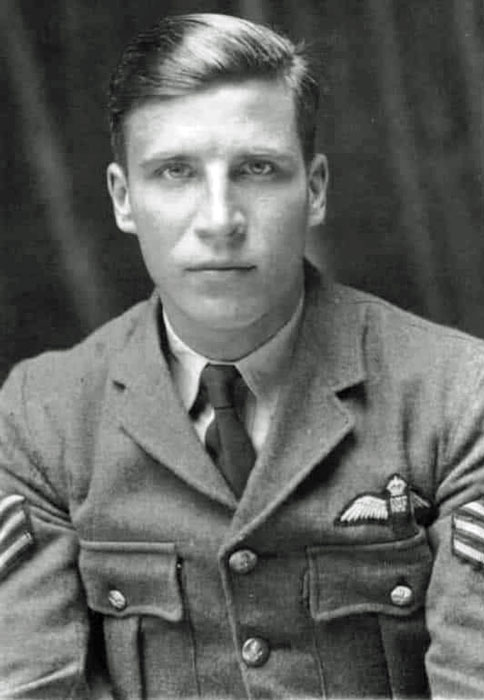
Richard Alfred Spyer of Worcester Park, Surrey was born in mid-1917, the son of Richard Alfred Spyer (1890-1977) and Violet Edith Spyer (nee Slade 1893-1969).
He joined the RAFVR about March 1939 as an Airman u/t Pilot. Called up on 1st September, he completed his training at 10 FTS, Tern Hill in early May 1940 and arrived at 5 OTU on the 18th, then being posted to 111 Squadron at North Weald on the 25th.
Spyer was attached to 607 Squadron at Usworth on 31st May for further instruction on Hurricanes. This attachment became a permanent posting and he went south with the squadron to Tangmere on 8th September.
On the 9th September Spyer crashed at Stilstead Farm, East Peckham during a combat with Me109s and Do17s in Hurricane P2680, slightly wounded.
In early November 1940 Spyer sailed in HMS Argus for the Mediterranean. On the 17th he was in the first flight of six Hurricanes to take off for Malta, led by F/Lt. JAF MacLachlan.
Spyer’s Hurricane, V7413, ran out of fuel and he baled out into the sea. MacLachlan called in the Sunderland which was leading them to Malta, and it landed and picked up Spyer.
In all 12 Hurricanes took off from Argus, however due to the reported presence of strong Italian forces, the launch point was further west than that of previous ferry launches, that plus other factors, led to eight Hurricanes ditching through lack of fuel.
He joined 261 Squadron at Ta Qali, Malta. On 22nd March 1941 eight Hurricanes of 261 took off to intercept ten Ju88s approaching Grand Harbour, with a Me109 escort. In the ensuing engagement five of the Hurricanes were shot down, including V7672, flown by Spyer. All five pilots were lost.
Spyer was 23 and is commemorated on the Malta Memorial.
That little cog I bought on a whim at Biggin Hill is far more than a piece of scrap metal. It is a link to Hurricane P3554, to the summer of 1940, and to a young man who fought with courage against the Bf 109s from Jagdgeschwader 2 during an aerial engagement over Swanage.
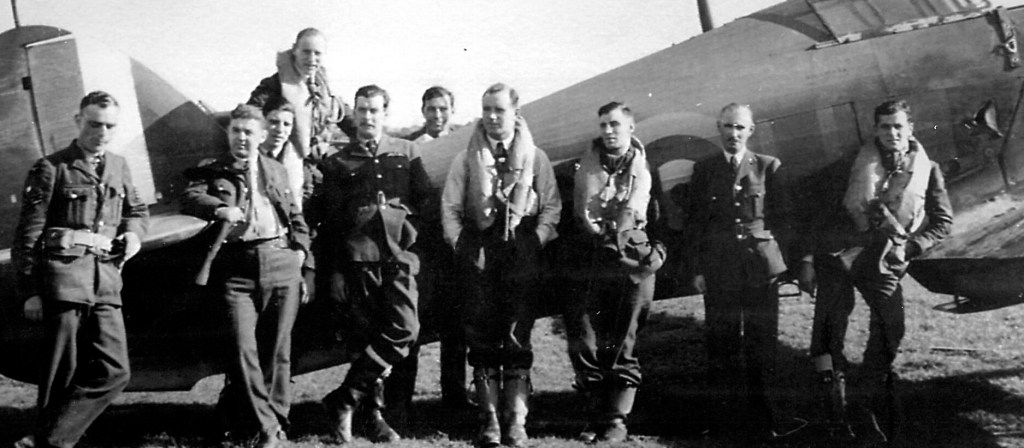
607 Squadron, believed taken at Tangmere, Spyer is standing third from left.
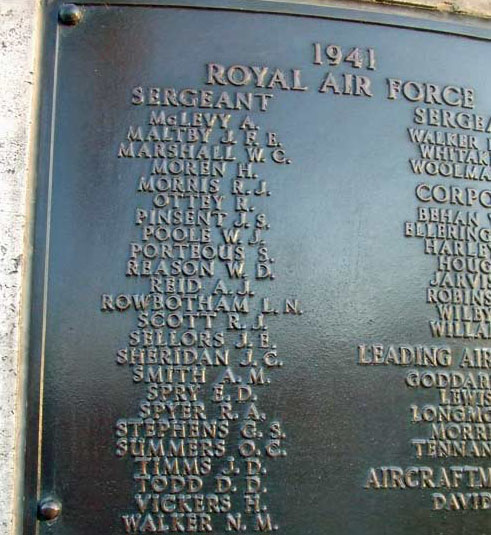
Malta memorial showing Spyers name.
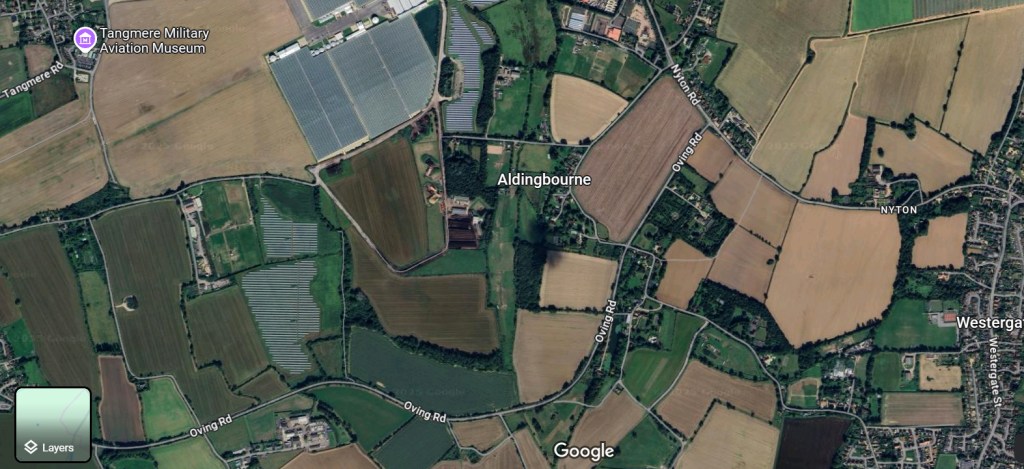
Aldingbourne. With Tangmere top left of picture.

 ONLYVFR
Leave a comment