I obtained the basic story lines from a post sent to me in an E-mail. They both intrigued me so I researched the story lines and developed them into what you are about to read here.
STORY NUMBER ONE
Many years ago, Al Capone virtually owned Chicago. But Capone wasn’t famous for anything heroic. He was notorious within the windy city in everything from bootlegged booze and prostitution to murder.
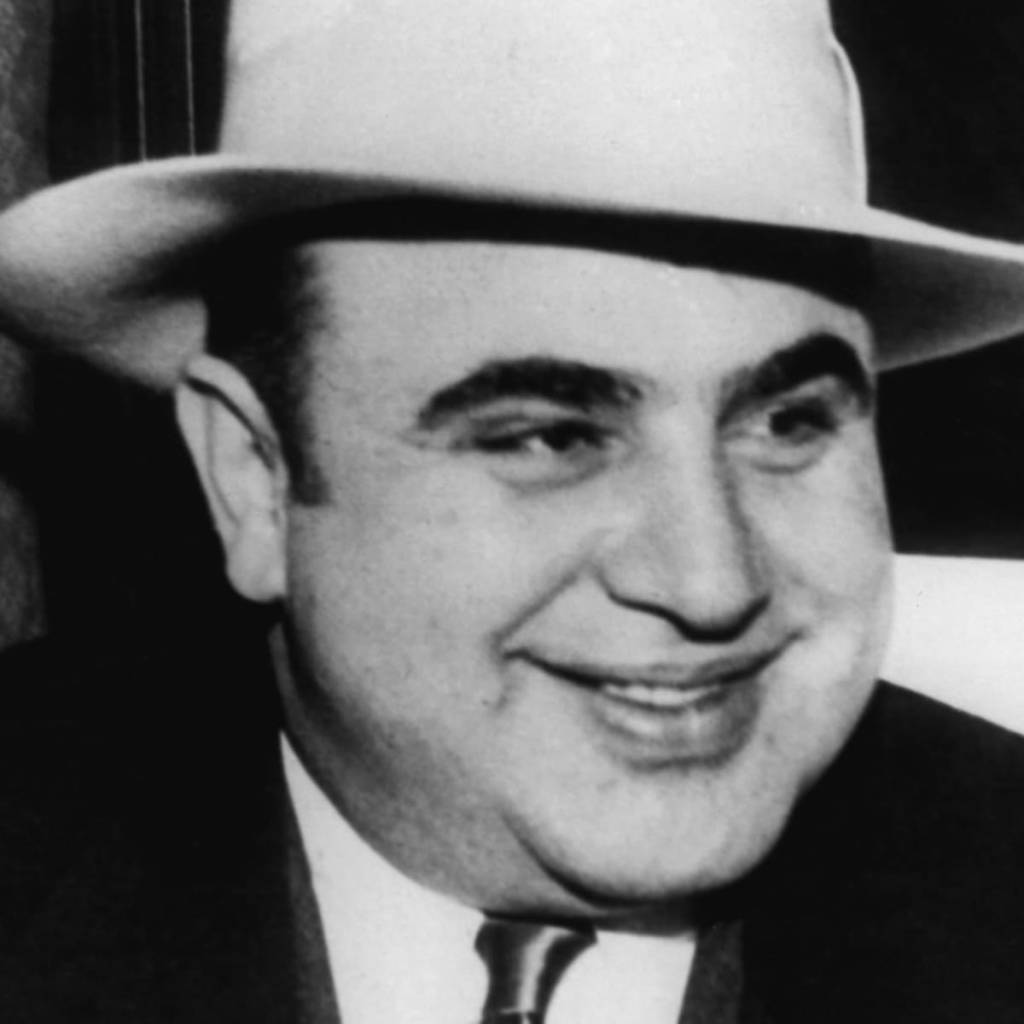
Capone had a lawyer nicknamed ‘Easy Eddie.’ He was Capone’s lawyer for a good reason. Eddie was very good! In fact, Eddie’s skill at legal maneuvering kept Big Al out of jail for a long time.
To show his appreciation, Capone paid him very well. Not only was the money big, but Eddie got special dividends, as well. For instance, he and his family occupied a fenced-in mansion with live-in help and all of the conveniences of the day.
Eddie lived the high life of the Chicago mob and gave little consideration to the atrocity that went on around him. Eddie did have one soft spot, however. He had a son that he loved dearly. Eddie saw to it that his young son had clothes, cars, and a good education. Nothing was withheld. Price was no object.
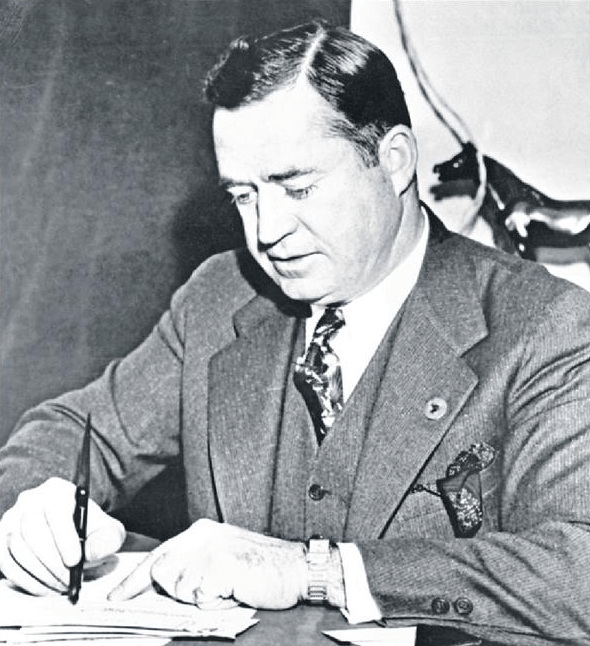
And, despite his involvement with organized crime, Eddie even tried to teach him right from wrong. Eddie wanted his son to be a better man than he was. Yet, with all his wealth and influence, there were two things he couldn’t give his son; he couldn’t pass on a good name or a good example.
One day, Easy Eddie reached a difficult decision. He wanted to rectify wrongs he had done. He decided he would go to the authorities and tell the truth about Al ‘Scarface’ Capone, clean up his tarnished name, and offer his son some semblance of integrity. To do this, he would have to testify against The Mob, and he knew that the cost would be great, but he testified anyway. Eddie also tipped off the authorities that Capone had fixed the jury. Thus causing Judge Wilkerson to switch juries with another federal trial before the Capone trial began.
Within the year, Easy Eddie’s life ended in a blaze of gunfire on a lonely Chicago Street .. He was shot and killed on Wednesday, November 8, 1939, while driving his 1939 Lincoln Zephyr coupe in Chicago. When he left his office in the afternoon, he was reportedly carrying a cleaned and oiled Spanish-made .32-caliber semi-automatic pistol, something unusual for him.
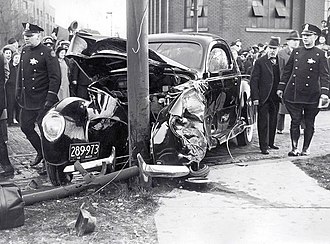
Two shotgun wielding gunmen in a dark sedan drove alongside Easy Eddie as he approached the intersection of Ogden Avenue and Rockwell Street in Chicago. Both fired a volley killing him instantly at the age of 46. His Lincoln crashed into a roadside post while the killers continued eastbound on Ogden Ave and were lost in traffic. No arrests were ever made.
But in his eyes, he had given his son the greatest gift he had to offer, at the greatest price he could ever pay. Police removed from his pockets a rosary, a crucifix, a religious medallion, and a poem clipped from a magazine.
The poem read:
The clock of life is wound but once, and no man has the power
to tell just when the hands will stop, at late or early hour.
Now is the only time you own. Live, love, toil with a will.
Place no faith in time. For the clock may soon be still.’
STORY NUMBER TWO
World War Two produced many heroes. One such man was Lieutenant Commander Butch O’Hare. He was a fighter pilot assigned to the aircraft carrier Lexington in the South Pacific.
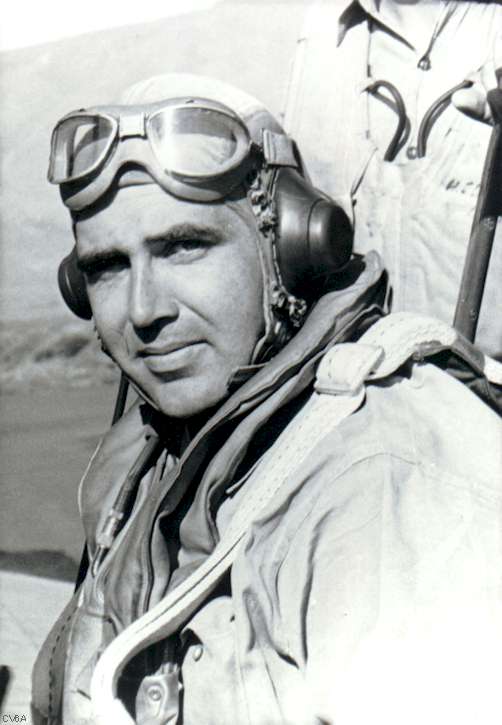
In January 1942, Butch’s squadron was transferred to the USS Lexington. The same month the Japanese stormed ashore at Rabaul, several hundred miles north-northeast of Australia. Butch’s squadron and the Lexington became part of a task force commanded by Vice Adm. Wilson Brown, who had clear orders: Leave Pearl Harbor, cross the equator into the South Pacific and attack the Japanese.
As they steamed toward Australia, Brown realized that he was in uncharted waters for the U.S. Navy. All he had to rely on were navigation surveys completed by the British Royal Navy nearly a century earlier.
When he pointed his ships at Rabaul, a Japanese scout plane spotted them.
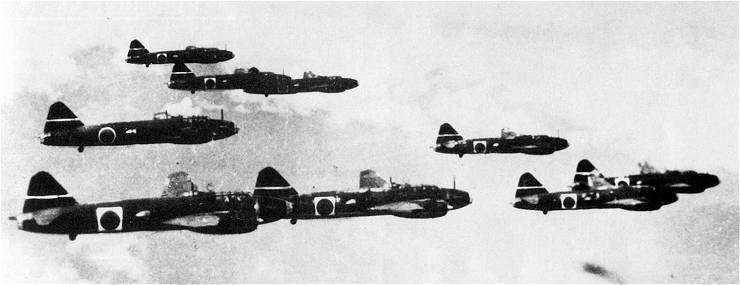
The Japanese commander at Rabaul had 18 land-based Mitsubishi bombers, nicknamed “Bettys” by the Americans because of their voluptuous shape. (The real Betty was said to be a well-endowed American Army nurse.) At 2 p.m. February 20, 17 Bettys took off to attack Brown’s task force in two waves. Through his periscope, an American submarine commander saw them coming and risked surfacing to radio the task force.
All nine Bettys in the first wave were shot down by anti-aircraft fire and the Lexington’s Wildcat fighters.
Butch and his wing man, Duff Dufilho, were launched from the Lexington, and they watched the aerial battle as they climbed to combat altitude. Then the Lexington’s combat-information center radioed them to say that the remaining eight Bettys were on the way.
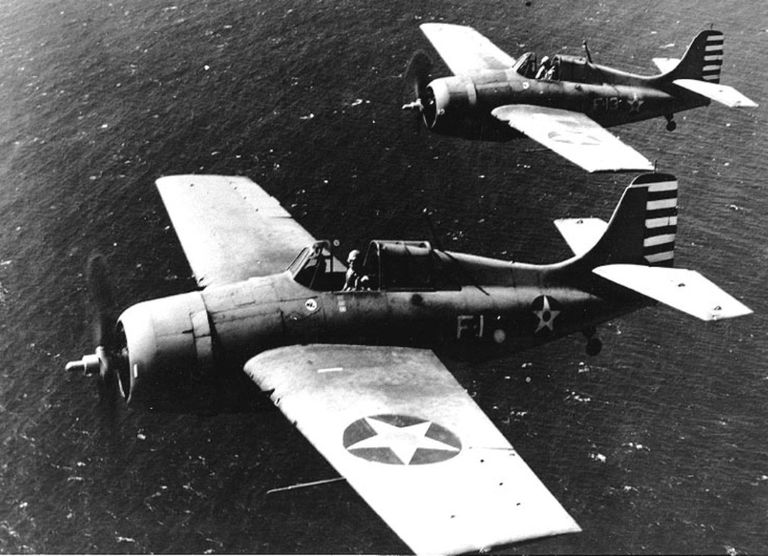
As the second wave of bombers approached, Butch and Duff realized that they were the only American fighters positioned to attack. They set their machine guns to fire and tested their guns. Butch’s four machine guns worked fine, but Duff’s four jammed.
The Japanese were about three minutes from dropping their bombs on the Lexington when Butch zoomed down to attack. The Japanese were flying in a V formation. Butch let the lead bombers pass, took aim at the last two on the right and fired short machine-gun bursts. His hours of gunnery practice paid off as the bombers dropped out of formation.
Butch weaved in and out of the now broken formation and fired at as many planes as possible until all his ammunition was finally spent. Undaunted, he continued the assault. Persistently diving at the planes, trying to clip a wing or tail in the hopes of damaging as many enemy planes as possible and rendering them unfit to continue their attack on the Lexington.
Finally, what was left of the exasperated Japanese squadron broke off the attack and retreated.
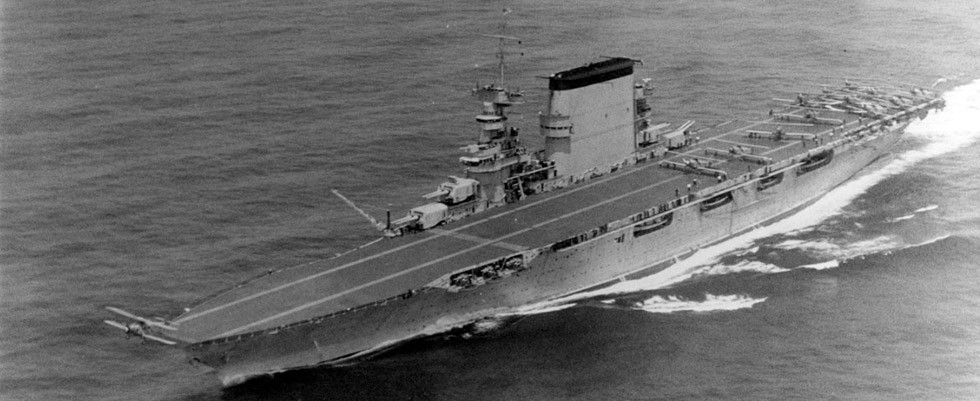
Butch was back on the Lexington shortly after 5:45 p.m. He had shot down five Japanese bombers in less than four minutes. This all took place on February 20, 1942 and for that action Butch became the Navy’s first Ace of W.W.II, and the first Naval Aviator to win the Congressional Medal of Honor.
Butch O’Hare’s final flight took place on the night of November 26, 1943, while he was leading the U.S. Navy’s first-ever nighttime fighter attack launched from an aircraft carrier. During this encounter with a group of Japanese bombers O’Hare’s Hellcat was shot down, his aircraft was never found. In 1945, the U.S. Navy destroyer USS O’Hare (DD-889) was named in his honor.
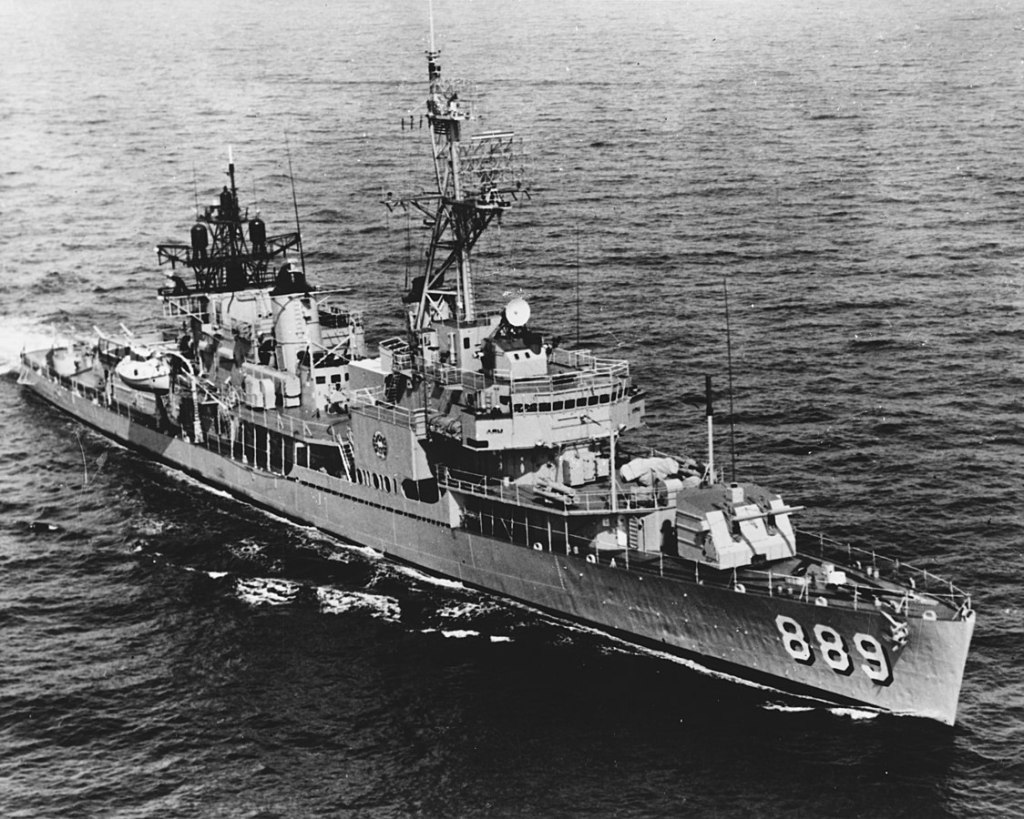
Killed at the age of 29. His home town would not allow the memory of this WW II hero to fade, and today, O’Hare International Airport in Chicago is named in tribute to the courage of this great man.
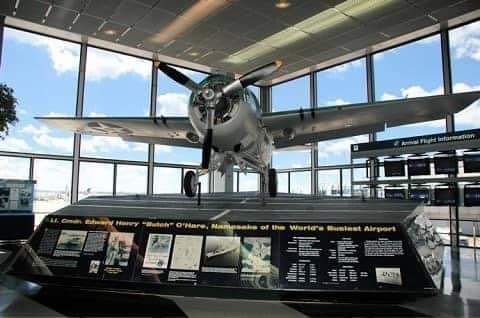
So, the next time you find yourself at O’Hare International, give some thought to visiting Butch’s memorial displaying his Wildcat and Medal of Honor. It’s located between Terminals 1 and 2.
SO WHAT DO THESE TWO STORIES HAVE TO DO WITH EACH OTHER?
Butch O’Hare was ‘Easy Eddie’s’ son.
Story compiled by using Wikipedia and other sources. All photos are also off the internet.
 ONLYVFR
Leave a comment