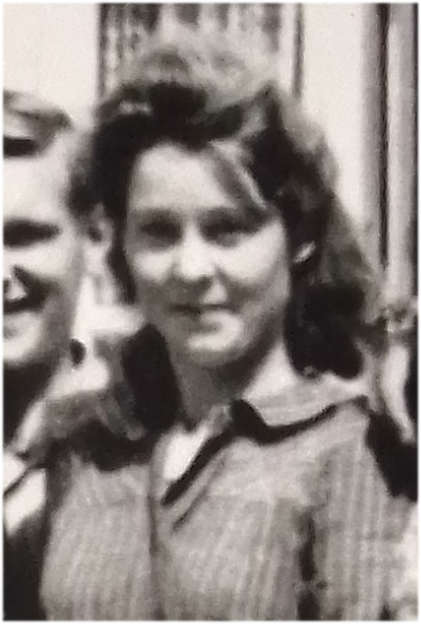
I recently posted a story on Facebook about ‘Marine Fourniez’, a very brave young lady who operated with the French resistance in WW2. It was shortly after I made that posting, that I was told of another brave young lady. ‘Therese Bourgignon’
A friend of mine in France (Pierrick Meron) has been working on a book about the late Therese Bourguignon.
The intriguing story he tells starts when an American Car stopped at Therese’s farm yard in June of 1958. Fortunately the owner of the farm yard where Therese lived was attending a party for Therese’s son and spoke English.
‘A giant of an American’ got out of the car and introduced himself as Charlie Moore an ex USAAF pilot, Charlie told them all how, when she was 16 years old Therese had hidden him and her cousin Frederic from the German occupiers for three months under a pile of firewood in a woodstore. She had never told anyone about that part of her life.
She had actually become part of a resistance group at the age of 15 and half years old. Her role was in reconnaissance, she often carried a false ID and the German Gestapo never found her two revolvers, the grenades and the ammo that was hidden in her Grandmother’s house.
Charlie’s story and the association with Therese starts when he was flying with 380th Fighter Squadron of 363rd Fighter group, part of the 9th Air Force based at ‘Staplehurst’ in Kent.
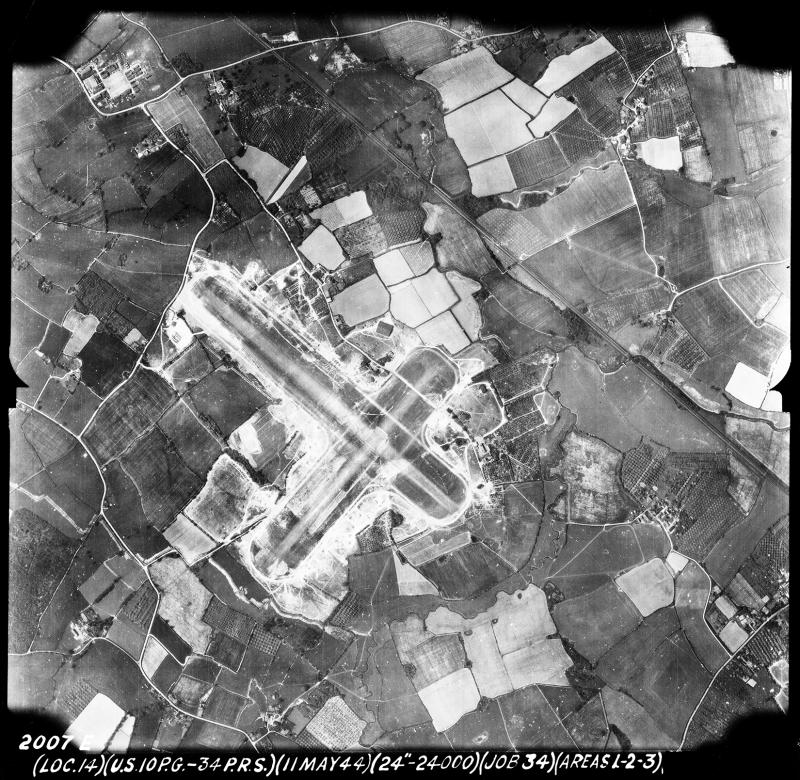
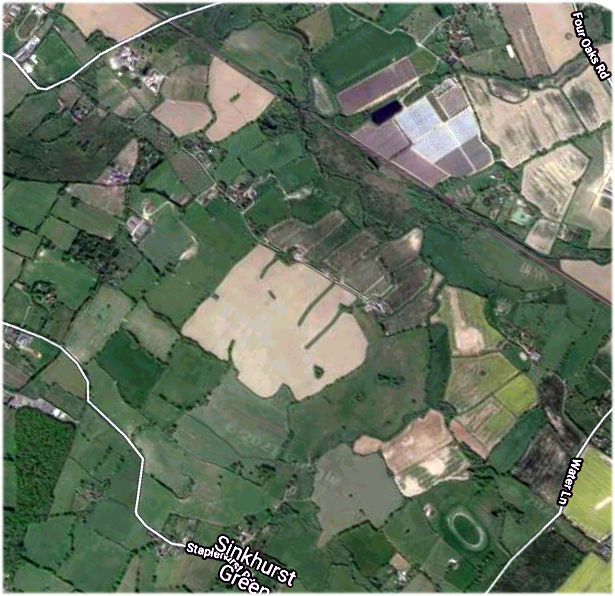
Built during 1943 as an Advanced Landing Ground (ALG), Staplehurst was used briefly by RAF fighter squadrons during August to October 1943 and then allocated to the Ninth Air Force. Developed and improved during the winter of 1943-44, the station eventually had two Sommerfeld Track runways with BRC intersections, 70 Sommerfeld Track and BRC hard standings, one Butler combat hangar and four blister hangars. It was occupied by the 363rd Fighter Group, equipped with P-51s, from April to July 1944, but was then unused until the airfield closed in September 1944.
The mission in April of 1944 was to escort B24 bombers to Lyon bombing the Railway Station. It started at sunrise. And at 0944 at 18000ft above Sancerre he saw german fighters (10 BF109) above him. He decided to attack and destroyed one of them. He then followed the aircraft down, he saw the pilot bail out and watched the chute deploy, he then apparently flew passed him and saluted. Unfortunately another German had followed them down. The second BF 109 opened fire and damaged Charlies left undercarriage so he decided to high tail it back to England.
Whilst making the run for home he thought he had flown over ‘Contentin’ but he was wrong and then saw more German fighters above him. He descended down to the deck, flying a few feet above the ground trying to stop the fighters getting a good shot in. At the last moment he noticed a power line and passed under the wires, unfortunately he scraped through the branches of a tree which destroyed the radiator of his P51 he climbed to a good height and bailed out, seeing the aircraft crash at ‘Batilly’. He touched down at Serans near Ecouche, as he touched down the two Rogers brothers were fishing near the mill. Jaques led him away whilst his brother Michel diverted the Germans who were searching for him.
As Charlie and Jaques walked along the side of the river Orne toward the the mill, they met Bernard and Francis Peschet who told them where they could find a ford to be able to cross. All of them then crossed the river, apart from Michel who stayed on the other side with the 77th Infantry division following him.
On reaching the hamlet of Misaudiere they found civilian clothes for Charlie and buried his flight gear along with his Colt 45. It was obvious Charlie couldn’t stay there as it was only 6km from the 77th headquarters in the town of Putanges. These brave French people needed help, so they called on a Mr Verrier in Ranes (he was a member of the resistance) and had been since 1940 when he was a member of the B.O.A.
Charlie was then guided to St Brice Sous Ranes, where he met Felix Terrier, Felix gave him his bike and they both made their way to a Mr and Mrs Pottier where he stayed for three days. They then moved him to Mr Verriers house but it was considered too dangerous.
After two days he moved again to a Mr Guillomard’s house in St Martin I’Aigillon, but this was also proving to be dangerous as Mr Guillomard already had another guest, Mr Bachelier who was actively being searched for by the local Germans.
So it was here that a young 16 year old girl (Therese Bourguignon) offered her help to them. Therese lived with her grandmother in a small farm near Marcei. So a day later Mrs Bachelier picked up Charlie and Therese in her car, Mrs Bachelier drove and in the front passenger seat sat another resistance member, whilst Therese and Charlie sat in the back seat.
But 2km later the German Feldgendarme stopped them to make a search. One soldier asked for the papers from the two front passengers and a German with a machine gun goes to the rear seat, Therese grabbed Charlie and started French kissing him. The German uttered ‘Franzouzich gross schwein!’ (French are all big pigs) and lets them go with no check.
Charlie spent 3 months on the ladies ‘Bourguignon farm’. Therese’s cousin Frederic was also hiding in the woodstore, he was hidden because of the Nazi’s obligation for young people of occupied territories to be transported away and work for Germany.
When the US forces arrived Charlie was 13 kgs heavier than when he parachuted out of his P51.
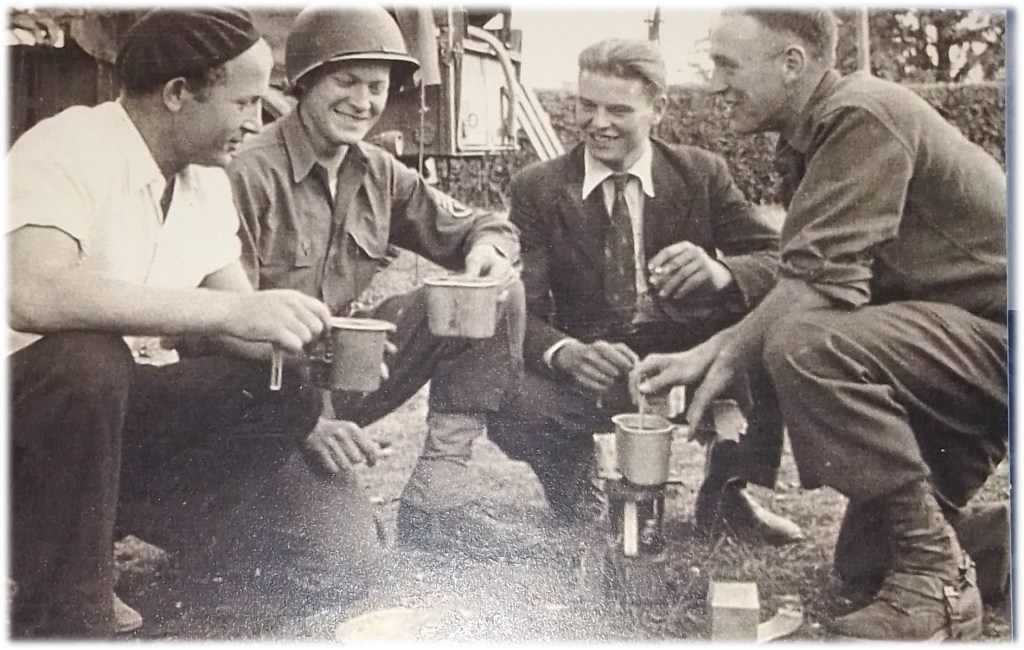
Here is an update on Therese and Charlie’s story.
The US Army found Charlie on the 12th August 1944. He was found by Walker and Gemler of the (90th Infantry division of the 3rd Army) Here in this photo you can see Frederic enjoying his first decent cup of coffee for at least four years, you can almost hear him sighing with a satisfying (Aaaah). He also seems to be lost between wartime and peace, for him the war is now over and he is now out of hiding.
Charlie is clearly showing much relief that he is at last on the correct side of the frontline. But for him the war is not over. He spent two weeks back in the UK before returning to the States for rest and recreation. During that period Charlie was badly injured in a car crash and he then spent a few months in hospital. After that when he was declared A1 (fit for flight) he returned for duty to the USAAF. He was not assigned back to Europe though. He converted onto P47 Thunderbolts and was sent to the Pacific. He took part on the assault of Okinawa and a number of other operations until the end of the war, retiring from the USAF as a Lt. Colonel.
He visited France a few times and on one occasion returned to ‘Batilly’ where he was shown the remains of his P51. These have now been recovered by a small French association called ‘Les Canard’ (The Ducks) and can be found in a museum at Couterne in France, about 7 kilometres from my house in Couptrain.
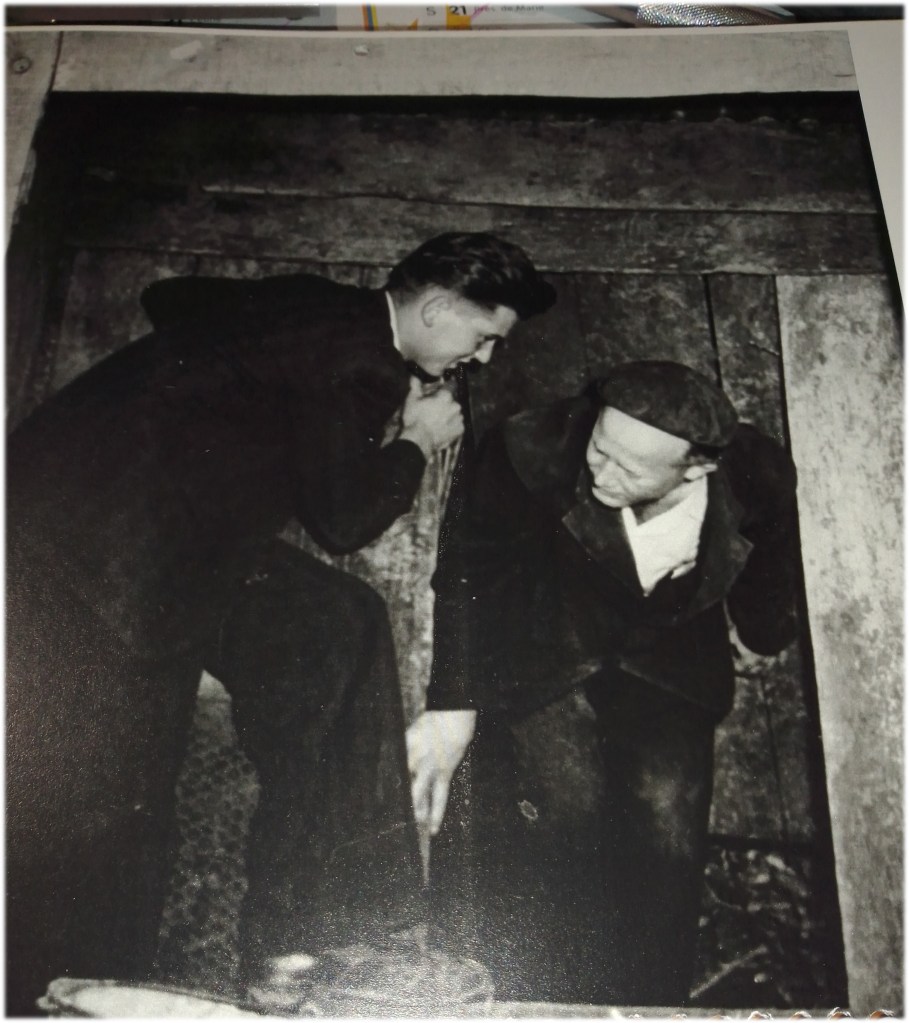
Charlie and Frederic inspecting the woodstore 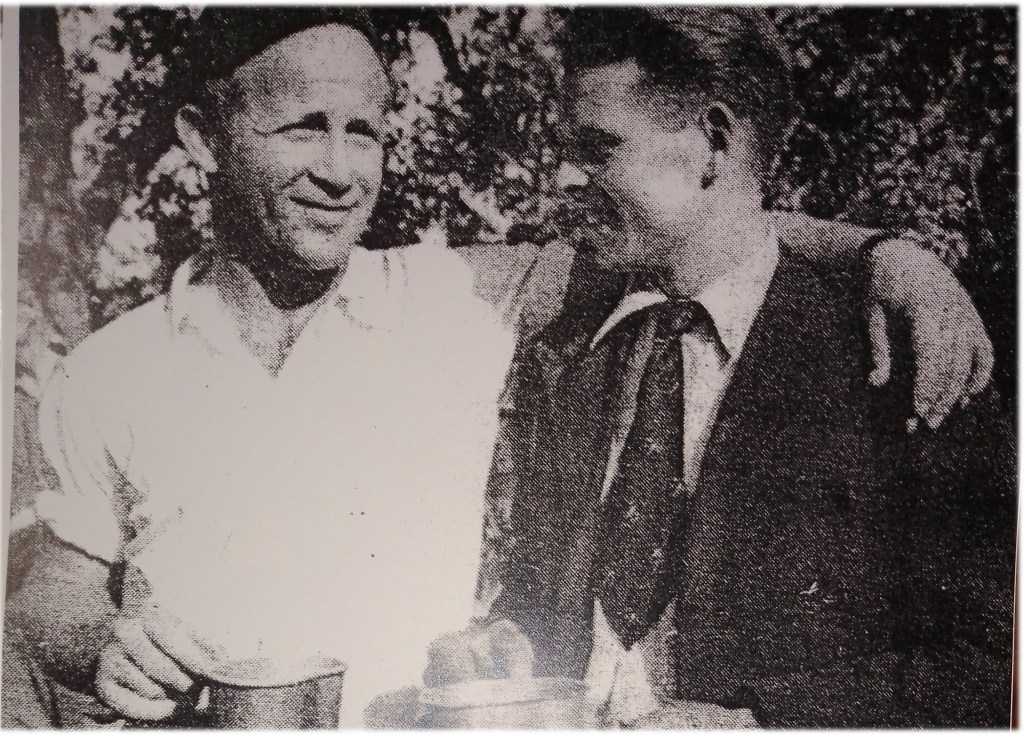
Charlie left and Frederic right, still enjoying the coffee. 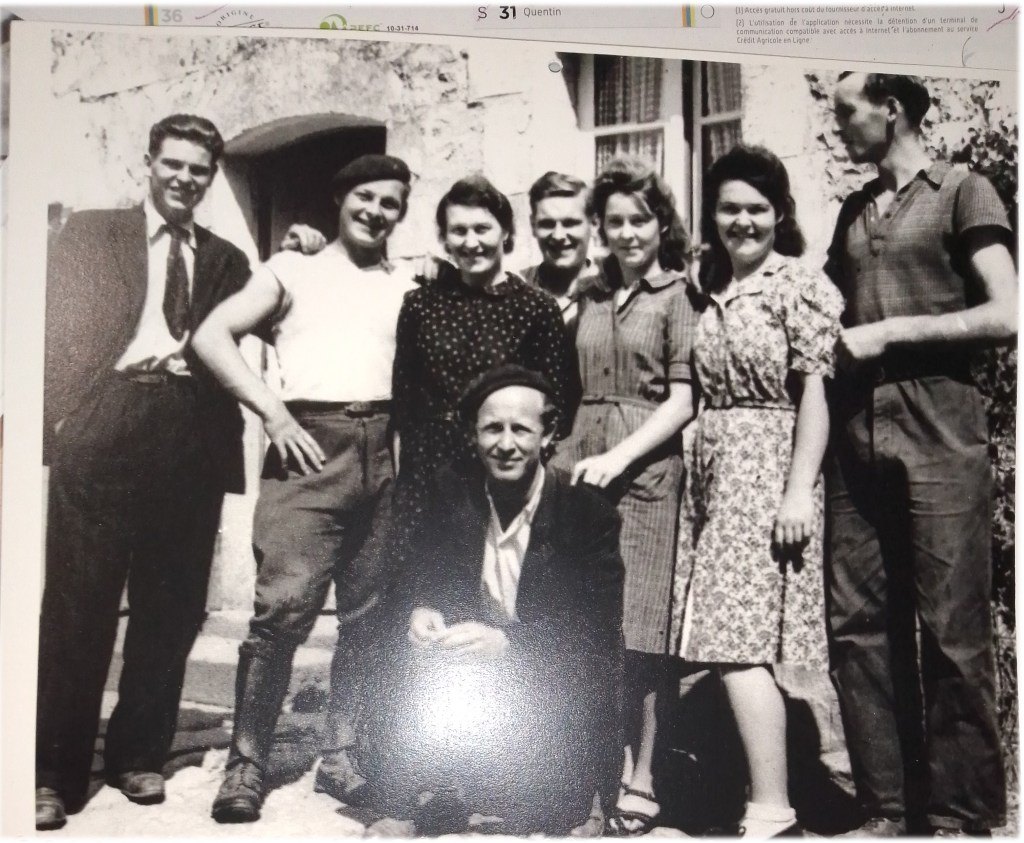
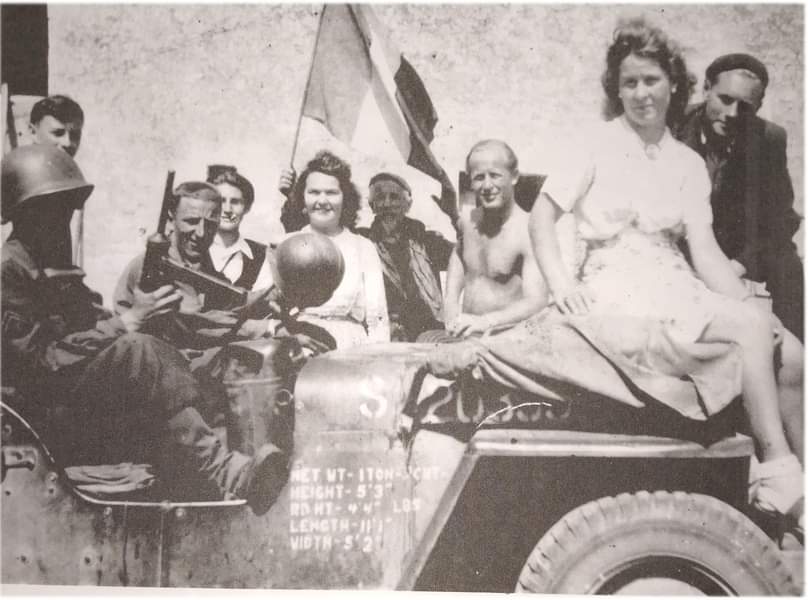
Therese is third from the right with Charlie kneeling in front
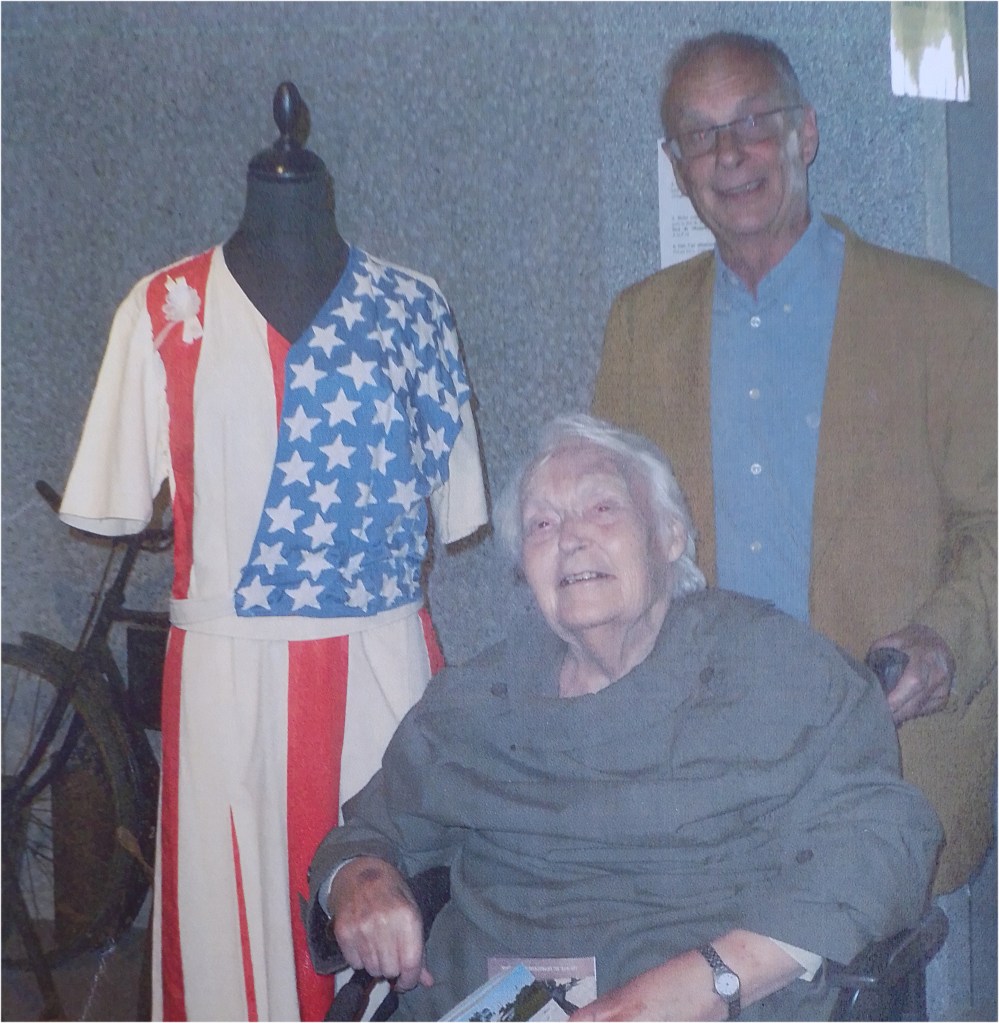
But Therese had done so much more than just this deed and Pierricks full story will go so much further into the story of this brave young lady. Therese was also a dressmaker and in one of the photos she is wearing an American type dress she had made. After the war, Therese continued to work as a dressmaker, she met her husband at the beginning of 1947. They were married very soon after and she moved to a little farm with her husband. She then became a female farmer. Fred (her son) was born at the end of 1947.
She received the Resistance volunteer medal for the young and she also received a medal from the American Government.
In 2001, Charlie sent Frederic a calendar with photos of “their old good time”. Some of the photos shown here are taken from that calendar.
The really sad thing about this story is that after the visit from the ‘giant American’ and people learnt what she had done, Therese received a poor reception from other locals around the farm. Apparently jealous of her accolade and that is why Pierrick is looking at naming his book ‘Therese’s teardrops’
At the end of her life she said that the Germans and the Gestapo were less cruel to her than her own family.
So sad indeed.
Vive La France.
 ONLYVFR
Leave a comment