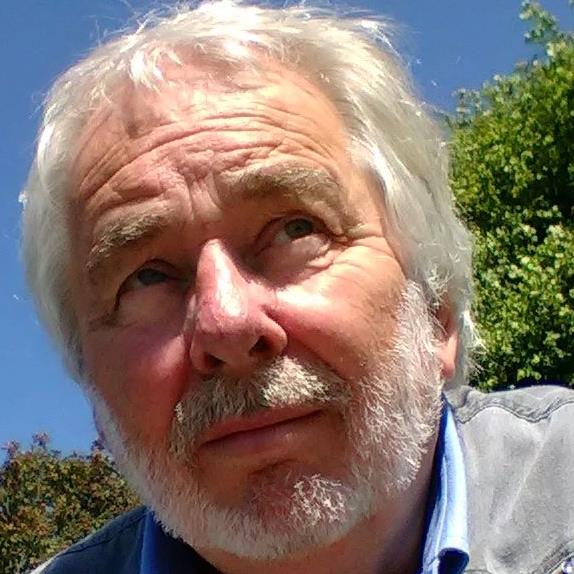
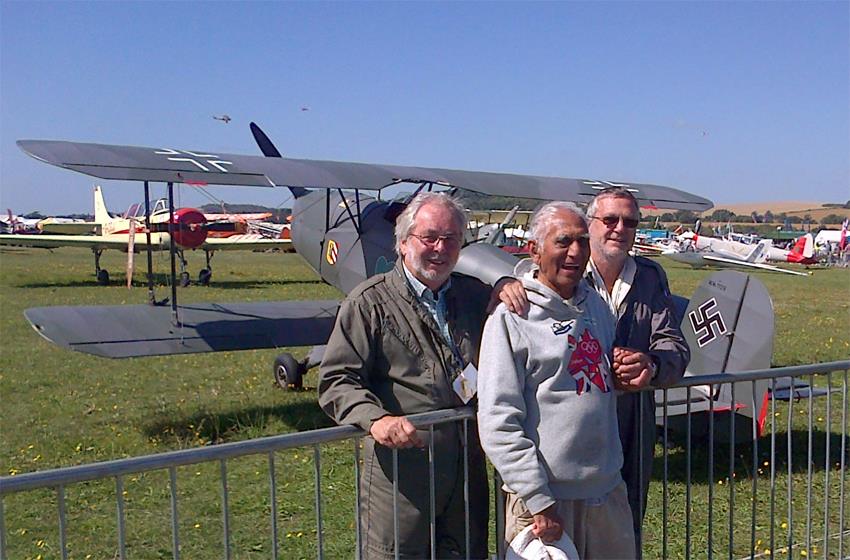
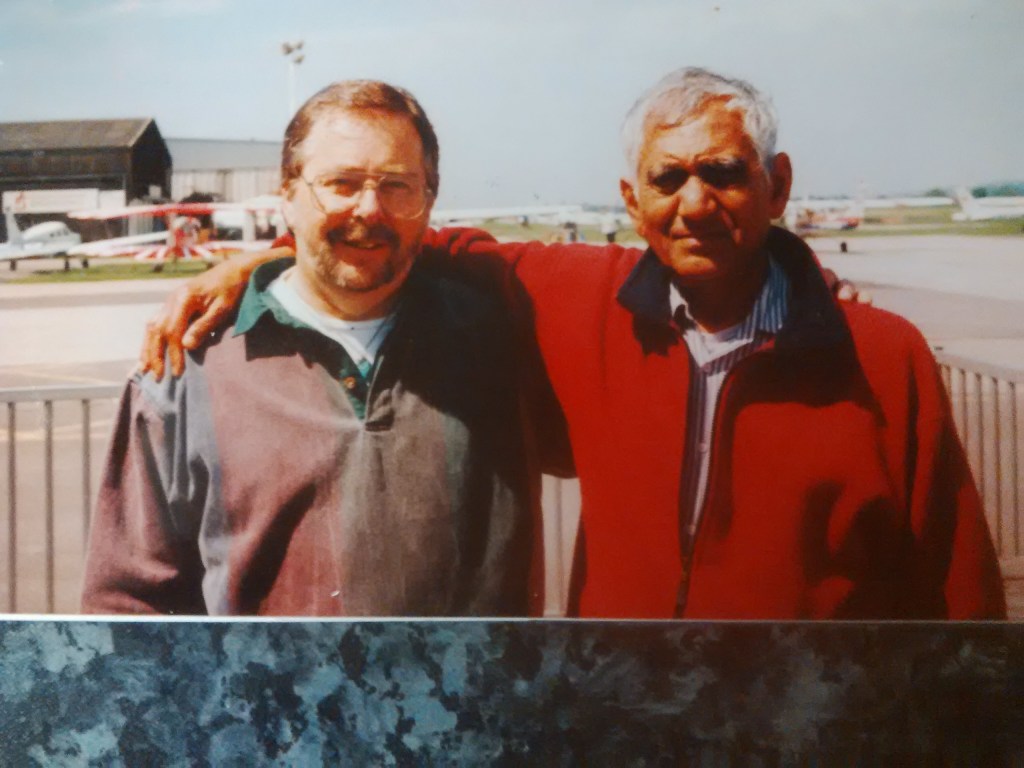
There have been a number of influences in my life flying within the General aviation fraternity. But one that immediately comes to mind is a very venerable Indian gentleman at Shoreham Airport who went by the name of Toon Ghose.
Toon Ghose may not have been the first person to influence me during my flying days. That probably goes down to Martin Nunn, Martin was the Chief Flying Instructor at Air Touring Flying Club at Shoreham Airport, but he left early in my training and I was handed over to Ken Alwyn who got me up to scratch for my General Flying Test flight with non other than. Toon Ghose.
Toon had a spectacular history well documented in his book by Pat Jackson called “Tigers in the Sky” At that time in 1977 he was CFI at Brighton Flying Group, later to become Toon Ghose Aviation.
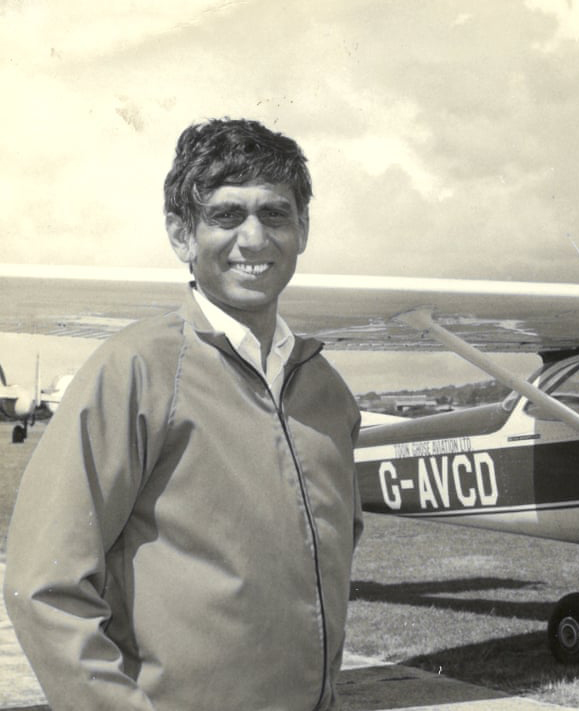
I had flown with Toon once before the test flight to obtain my licence. It had been a couple of years prior and I had been asked by a friend and Boss at the time “Les Slumbers” if I would accompany his two children for a pleasure flight as he did not want to go, the pilot and instructor was Toon. He asked me if I had flown before and I admitted I had flown in a glider a couple of time at Parham. His answer to that was “Good you fly, I eat lunch” to which he produced a sandwich and got into the right hand seat leaving me to sit into the pilots position. Luckily the kids in the back did not realise which seat was which. Of course the aircraft had dual controls, it was a Cessna 172, registration G-AVCD and it had a name emblazoned on the side which read “Lord Shiva”
Lord Shiva is the third god in the Hindu triumvirate. The triumvirate consists of three gods who are responsible for the creation, upkeep and destruction of the world. The other two gods are Brahma and Vishnu. Brahma is the creator of the universe while Vishnu is the preserver of it. Shiva’s role is to destroy the universe in order to re-create it. Now that is heavy man.
With Toons encouraging words in my ears I actually did the take off and then flew down to Arundel Castle, whilst he calmly sat there eating his sandwich, even when finished he still refused to take control. We entered the circuit back at Shoreham and I insisted, because of the kids in the back that he took over. But he would have non of it and I continued onto the approach to the airfield, flying over Shoreham towards the river Adur and the runway that was spread out along the other side of the river bank. We crossed the threshold and because he looked completely at ease I continued to encourage the aircraft to re-establish its relationship with the good grassy earth of runway 25. I am glad to say that no one was harmed while making that flight that day. Only my pocket, because a spark had been ignited, a spark that had been laying dormant since I was a very young lad living in Southwick watching the Tigers Moths fly over my parents house in Highdown, Southwick which lies just east of Shoreham Airfield.
So here I was again with Toon, but this time it was to actually be tested by him to obtain my Private Licence certificate. However it was not the smoothest of tests. Firstly we could not find the keys to the aircraft and secondly, unknown to me one lesson in the syllabus of obtaining the certificate had been missed out.
We had flown for just under an hour when Toon asked me to return to Shoreham but to fly at 70 knots, I asked why as the aircraft cruised at 90 knots. He smiled at me and said, “I would like you to fly at 70 please” I am sure he had looked through my log book and seen the omission of the (slow flight lesson)
It is not a tricky thing to do, but I had only used that speed before when climbing away and approaching to land with flaps extended. I started to play with the throttle and the trim in order to fly straight and level but reduce my speed without gaining or losing height in the process; thankfully I managed it which he found perhaps a little amusing, even maybe a little impressed.
I gained my wings that day and I thank you Toon for your calm and encouraging influence shown that day to a very sweaty student under pressure. “Namaste” my dear friend “Namaste”
Toon helped me on my way again a few months later when Air Touring closed its operations at Shoreham and Ken Honey took over the premises, he changed the fleet of aircraft to Cessna 150’s. They are very good aircraft, but the Rallyes I had been flying had stick controls and the Cessna had yokes. I felt the stick to be a more natural feel to the yoke and anyway I wanted to fly a tail-wheel aircraft. So I ventured to Redhill which at that time in 1977 was the home of The Tiger Moth Club.
Unfortunately I was confronted by a very snooty club member who informed me that I could not fly their Tigers until I had at least 100 hours solo time. I had accumulated just 28 hours solo and 30 hours dual so 100 hours solo felt like, well felt like hours and years away. I left that place very dejected and was put off having any association with the Tiger Moth Club. It took years to get that encounter out of my head and the image of that rather snooty reception by one person who kept his foot in the door that day at Redhill.
A few days later I was sitting in the Terminal building at Shoreham when Toon came in, he approached me and asked how the flying was going. I told him that at the moment there was nothing on the field that I was interested in flying or that I had enough hours to fly, then I told him about my reception at Redhill, to which he answered, “You fly my Chipmunk” I reiterated that I was told I didn’t have enough hours to fly a tail-wheel aircraft. He came back with the response of “rubbish” he said “Lord Shiva will allow you to fly Chipmunk” He then introduced me to a young man called Ron Bowler one of his instructors and the man who did Chipmunk check outs.
Ron Bowler would be typically described as the image of a beatnik, or at least that is how he came across to me. I was given the pilot notes to read overnight and I had a lesson booked in for the next day.
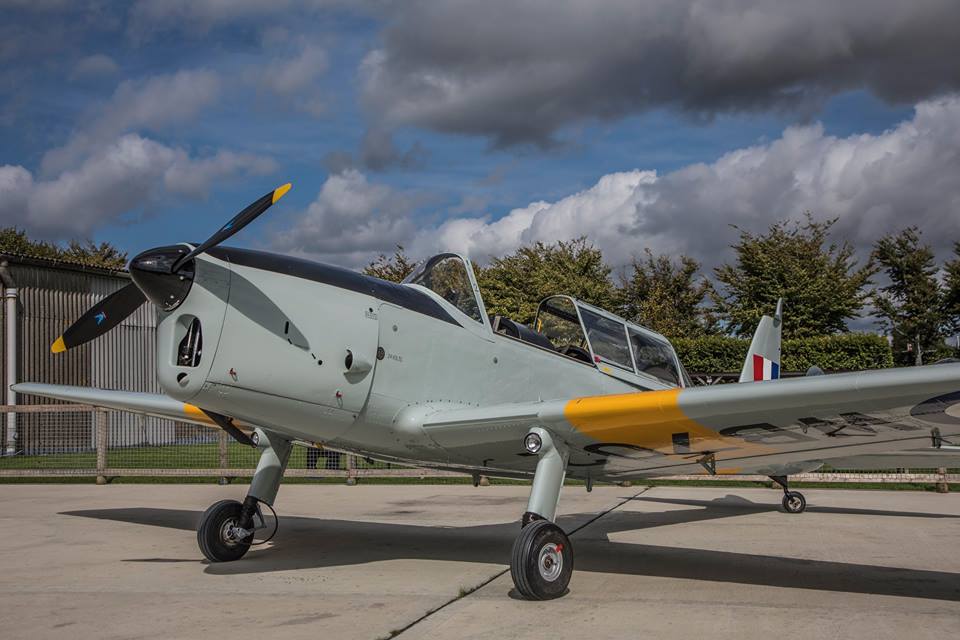
I can’t tell you how much of a momentous moment that was, It was my first step toward flying a Tiger but first I had to master the tail-wheel aircraft called the Chipmunk, known affectionately as the Chippie. This was to turn out to be my favourite aircraft of all time and an aircraft type that I still fly to this day. The next morning I looked over at G-BBMZ and Ron told me to sit in it and go through all the controls for at least half an hour whilst he did another flight with a student in something else.
Ex military aircraft, particularly British ones have a smell which is all of their own within the cockpit. It is a mixture of fuel, leather, engine oil and perhaps fabric dope. An unforgettable cocktail of smells that gets to you every time you climbed into one of those aircraft from that long ago era.
My log book tells me that on that day 26th May 1978 I had accumulated 28 hours solo and 33 hours dual and I was about to go fly a Chipmunk for the first time. A real aeroplane, an aeroplane with a tail-wheel.
The Chippie has a seating arrangement that is described as in tandem. In the case of the Chipmunk it means the pilot in command sits in the front seat and the instructor or passenger sits in the rear seat. The aircraft has dual controls but for centre of gravity purposes whilst solo the pilot has to sit in the forward cockpit. Adding to that the starting process of the engine has to be undertaken in that position.
Ron showed me how to taxi the Chippie which has an unusual braking system, that didn’t seem to go too bad and then we departed and flew off to the west of Shoreham above Selsey Bill where we did the upper air part of the check out. This included stalling, spinning some unusual attitudes, but not aerobatics, it did include taking the aircraft beyond 60 degrees of bank and holding height. That first flight took 50 minutes.
For some reason, maybe weather our next flight together was on the 13th June and we built up another 55 minutes. After we landed Ron asked me to bring the Chippie to a halt, asking how I felt about the aircraft and was I comfortable with it all. I must have answered positively because he then told me to stay in the aircraft and he got out of the rear cockpit, secured the seat belts, shouted at me through the engine noise and the prop wash, “Go take her for a circuit, just one you understand” He jumped off the wing and left me to ponder over what had just happened. All of my confidence had just got out and jumped off the wing with him.
The trim settings on the Chipmunk are set by revolving a small wheel vertically situated on your left in the cockpit. Half of the wheel is recessed into a metal panel, one half of the wheel is painted white while the other half is black like the rest of the cockpit.
I set the trim wheel to two divisions nose down, which equates to two notches of the white bit showing and then lined up on runway 07. I had set the flaps to the first stage for take off. The flaps are operated by a large handle on the right hand side; I also checked that the carb heat was set to cold, a small lever which is also on the right hand side. Brakes right off, very important this, the brakes are controlled by a ratcheted lever on the left hand side and when the brake handle is off there is no brake feel on the rudder pedals. I applied the throttle slowly up to the stop, the aircraft picked up speed quickly, quicker than before because we were now minus the weight of the instructor. Keeping the Chippie straight as we rolled down the runway we lifted off and established a climb, now I had to change hands, the control stick is normally held in the right hand and the throttle is held with the left hand, but in order to raise the flaps which is on the right I had to transfer my left hand from the throttle, making sure beforehand that the throttle friction nut was tight and the throttle would therefore maintain the power setting for the climb.
Turning left at 500 feet I continued the climb before turning onto downwind approximately at 1000ft, settling the aircraft into a cruise setting of 1900 rpm I trimmed to hold that height. I reduced the power back to 1700 rpm about three quarters of the way downwind to get some speed off prior to starting a descent, therefore achieving 65/70 knots before turning left again on to base leg, then the next step was to reduce the power again to 1500rpm to establish a descent. Now a change of hands again, this was to get first stage of flap down and also to put the carb heat to hot.
Checking that my descent and speed was steady I turned onto final approach. Once I knew I would reach the field, I began another change of hands to get the flaps down into their second stage for landing. I now had 60 knots and had trimmed back to where I had been setting it whilst flying with Ron.
That was my mistake, which became obvious on the touchdown, I had not trimmed to account for no instructor in the back, without him not only was the Chippie lighter but the weight in the rear cockpit had been removed causing a slightly more nose heavy aircraft. This resulted in me touching down on the main wheels prematurely and then bouncing slightly, the next thing was the tail-wheel touching and also bouncing, this effect is called porpoising and is dangerous because the effect usually worsens. When my main wheels touched the next time I remembered an old saying, if or when you get yourself in this position you go round before you plant the aircraft onto its nose and become a statistic.
I applied full power, the power came back but the response to climb was not immediate and I knew I had to change hands again and get the flaps back to take off position and also get the carb heat to cold. This change of hands produced some porpoising again but this time I was in the air and it must have looked rather bad from the ground. I was told afterwards that Ron Bowler went white in the face as he watched my progress that day down runway 07.
Every thing after this became quite settled and realising my mistake of not accounting for the lack of someone in the back seat I trimmed the aircraft to feel the aircraft and not just use the settings because that was where it was last time. The landing I made was good I touched nicely on all three points and taxied back in to meet Ron for a de-brief.
I learnt that day to fly any aircraft by feel and not by settings.
It would be another two flights with Ron, one of 40 minutes duration and a second flight of 15 minutes before he let me solo again and signed my book as cleared to operate the Chippie.
Thanks again Toon from that point on I never looked back.
Epilogue:
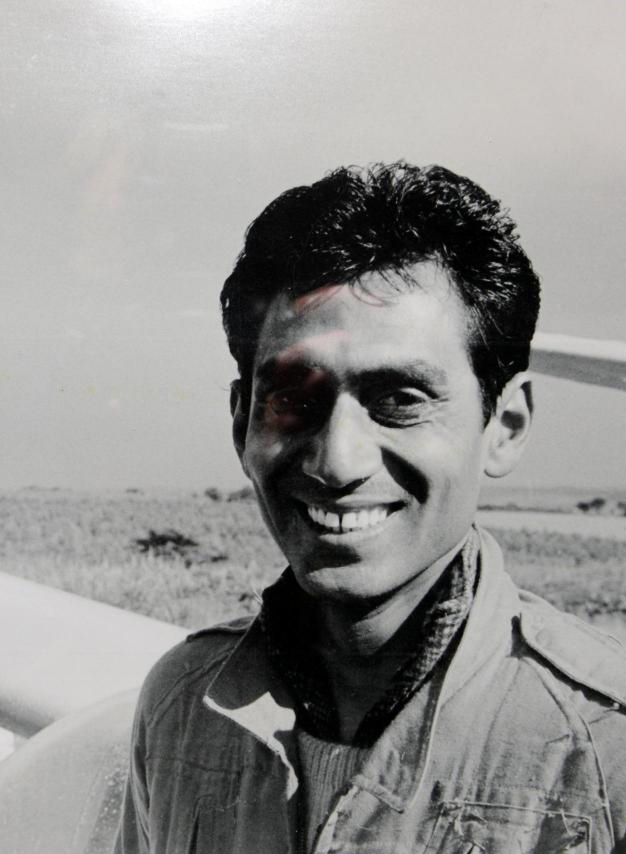
Toon Ghose died 20th February 2019 at the age of 91. In a 40-year career he inspired hundreds of pilots with his unorthodox teaching methods and extraordinary flying skills. I am proud to have flown with him it was always a joy.
Toons real name was Probhat, he was born in Calcutta, now Kolkata, India, on August 19, 1927. He arrived in the UK in 1955 after an epic six-month journey from Kolkata on a Vespa scooter.
His funeral took place on March 22, at the Woodvale Crematorium in Brighton at 2pm, followed by a reception at Shoreham Airport at 3.30pm. It was a fabulous reception with so many there to celebrate the life of a true aviator. I met so many old friends that day, friends who had re-appeared from the past. Those days stretched back through the 1960’s and on into the 1980’s and we all came together again to remember a person we all admired so much.


 ONLYVFR
Leave a comment