
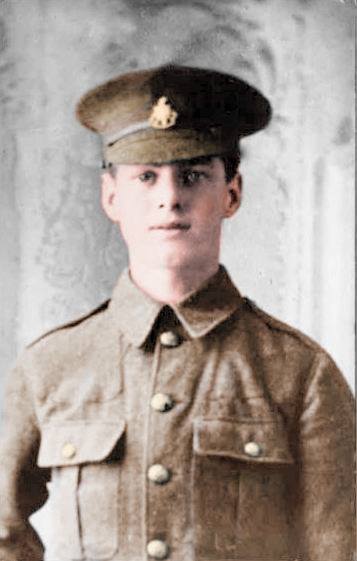
In the very early hours of the 9th May 1915, 110 years ago, George William Short and the 2nd Battalion of the Royal Sussex Regiment found themselves occupying the breastworks on the frontline, some 400 yards left of the ‘CINDER TRACK’ at RICHEBOURG L’AVOUE,
At 3.30am tea and rum was shared out amongst the men and at 5.00am the artillery bombardment of the German front line began. Then 30 minutes later the bombardment intensified and the advance began. The lead elements climbed out over the parapet to assemble in No Man’s Land and began to move towards the German line east of THE BOARS HEAD.
The advance was opposed by withering machine gun and rifle fire, particularly from the angle of German frontage to the east of the 2/RSR left flank, where the adjoining unit had faltered and failed to advance. The majority of the battalion failed to move more that 150 yards from their front line, less than half way across No Man’s Land. Some advanced to within 40 yards of the German wire and one man was seen to reach the German parapet.
Orders were received at 6.30 am to retire to the British front line parapet under the cover of a renewed artillery bombardment, but survivors were still returning to the line after darkness fell. Later in the evening, the remains of the battalion marched back to billets in LES CHOQAUX. They then continued marching rearwards on 11 May, to billets in OBLINGHEM and on the 12 May to billets in BETHUNE.
It was here that George wrote a letter to his mother “Martha” .whilst resting in the billets at Bethune.Just three days after he had gone over the top at “The Battle of Aubers Ridge” It was printed by “The Sussex Daily News” on the 20th May 1915 in their letters from the front column.
George wrote:
I am sorry to have to tell you that poor F Bowles and P Smith are wounded. We had a big fight on Sunday, (your birthday if you remember). I wrote a letter to you on Friday to wish you many Happy returns of the day but could not get it posted, so I carried it with me into the scrap. I am sending it within this letter, so it is worthwhile keeping and you would think so if you knew what it went through while in my possession.
Well, on Saturday night we moved up to the place we had to charge. On Sunday morning, at 04:30, our first gun spoke and fired a few “coal boxes” til 05:00 and then all the guns started. The earth seemed to shake and tremble, shells flew over our heads and you couldn’t hear what the next man said to you, if you tried.
It was like one continued roll of thunder, we all thought there could not be one possible man alive in front of us. Smoke and dust and all manner of things were flying about over the German lines. Then after half an hour of this we had the order to charge. We all streamed out over the parapets and lined out beautifully. We advanced till we got just over a hundred yards from the Germans, and then there machine guns started on us. They absolutely mowed our chaps down and we flopped down and remained as still as mice.
Poor old P Smith was next to me and he got hit in the arm. Tell Mrs Smith not to worry; he’s all right. The next two on my left were wounded and the next poor fellow was dead. Our officer got up to advance and was shot in the leg. It was murder. How they managed to keep all right under that terrific bombardment, I don’t know.
Well we laid there for a little while and then we started to make a hole to dig ourselves in. Our entrenching tool was our real pal. We remained there all day, with shells and bullets flying over us. Our company, which went out with 260 men or more and 5 officers had as many as 200 casualties.
I don’t know what happened to the trenches after we left, whether they were taken or not, but the aeroplanes that went up said we had fewer casualties than the Germans. If that is so they must have lost a great number of men. You should have seen our poor chaps try to crawl back. I started to at about 5.30 and it was one of the most risky things I have ever attempted. When we got in, I and another chap went back to find the regiment, or what was left of it, and found it behind the firing line. Then we marched to a barn and had two nice blankets each and hot tea and rum and plenty of it. Of course we have felt the effect of the strain these past few days, otherwise there is nothing much wrong with me.
Pete has joined us, but he’s in another platoon. My pal has been shifted to another platoon, so I’m rather on my own. Still I keep on smiling and I am not downhearted.
Our Colonel told us the French has surrounded a large body of Germans down by Arras and had made great captures including 40 officers, 12 guns and 50 maxims; so that’s good work.
I hope I shall see you all soon, although this business doesn’t seem like stopping yet. Could you send me a small parcel out please, as I could do with a bit of cake and a sucker or two? Don’t send condensed milk: I’ve got a tin of that. If you could send some dripping in a tin I should be very pleased with it, for that’s nice tack and in these times a luxury.
Well I shall have to close now so good-bye and God bless and keep you all and whatever you do don’t worry.
George
George William Short was my great Uncle. His sisterDorothy Short was my grandmother.
It was in 2016 that I found out about George and discovered his forgotten letter within the archives of the ‘Sussex Daily News’
I often wonder if his mum sent that small parcel and if so I do hope that he received it.
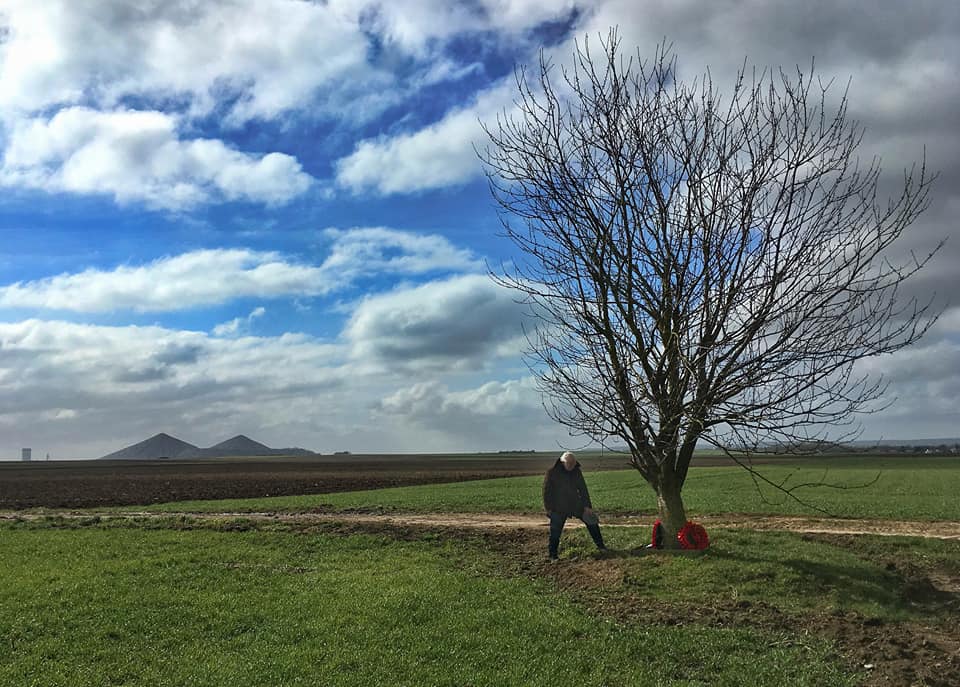
On the 25th September 1915 George faced the German trenches once more, this time it was at “The Battle of Loos” he made it as far as a place called the lone tree. That is where George lost his life at the age of 18.
See www.warhistoryonline.com for Georges full story look for “A letter from the front”
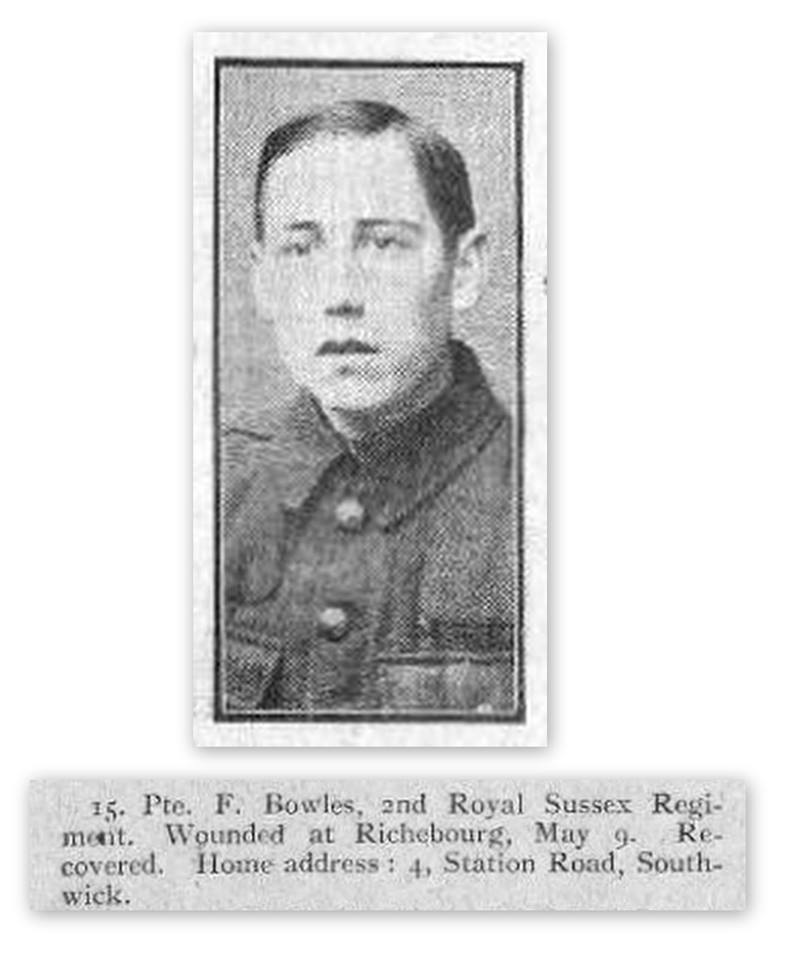
F Bowles was (I believe) Private Frederick William Bowles. G/1166. George was G/1173, so they most likely enlisted on the same day. He came from Southwick and was 19 years and 8 months old. Fred returned to the UK on 25 May 1915 (presumably after treatment in France) having received a gun shot wound to his thigh. This was to prevent further service, and he was discharged on 12 May 1917. His next of Kin was his father, Frederick Isaac Bowles of 4 Station Road, Southwick, Sussex
P Smith was (I believe) Private Percy Charles Smith. G/1169 who also enlisted on 04 September 1914, so likely he also enlisted with Fred & George. His home address in 1911 was 10 Adur Terrace, Southwick, and he was born in Southwick in 1895. Percy arrived in France on 04 Jan 1915 with George, to join the 2/RSR. He returned to the UK having been wounded, and recovered sufficiently to be transferred to the Labour Corps as Pte 157915 (The Labour Corps received many men who were not deemed physically fit for frontline service). It appears that his wound was still an issue however, and he was discharged from service on 09 August 1917.

 ONLYVFR
Leave a comment