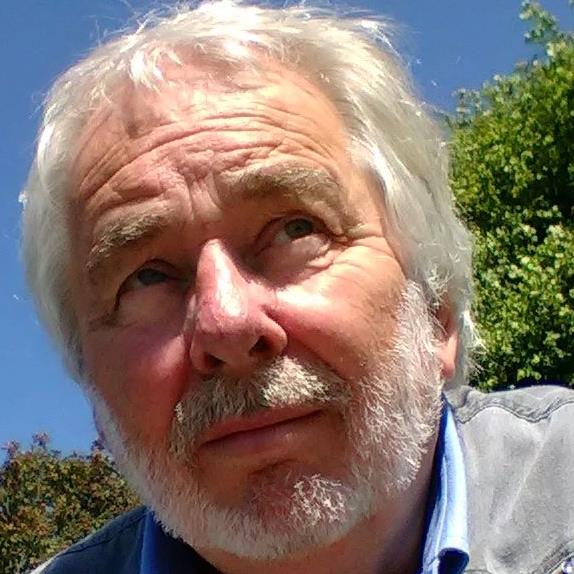
Jim Pearce, Oct 21, 1929 — Jul 26, 2017
On the 16th August 2017, I attended my friend Jim Pearce’s funeral at Shipley Church in Sussex. Jim was a well known and respected aviator; he had been a crop sprayer for at least 25 years, flying practically all over the world. There are many stories that I can tell about Jim Pearce, one day I will, perhaps.
After the funeral I arrived back home and found a notification on Facebook about an Auster being stolen and flown to France in 1950….It is strange that a story about an aircraft’s early history should make a connection with me on that day of all days and that the person who stole it in 1950 had just made an appearance at Sywell Airports museum, on the 10th August 2017 to tell his story…….This had then, in turn, led to the story showing up on my Facebook page the very day of Jims Funeral. You might very well ask what is so strange about that. Well read on.
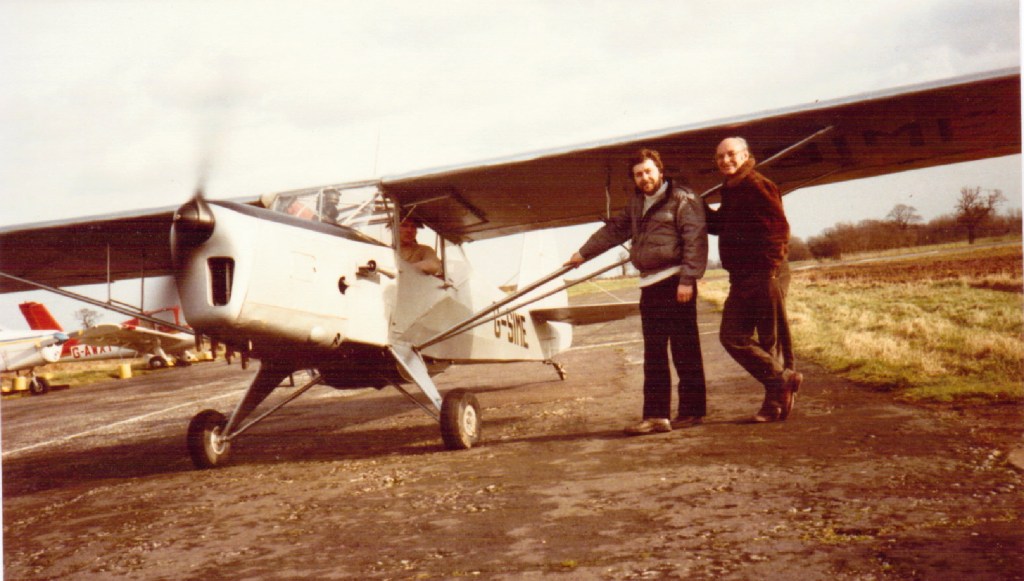
Jim, (Colin his son) and myself had owned an Auster. The Auster that we bought in 1985 had not always had that personal registration; it had previously been registered as G-AHHP and it was now becoming clear, that this was in fact one and the same Auster that had been stolen. How extraordinary is it that this story about the aircrafts early history and our association with it in 1985, now 35 years ago should appear that day.
I believe Jims spirit is strong and he is still looking for historical connections out there somewhere in the aviation cosmos. He had many stories to tell and I believe has left me to pick up on this one. Even stranger, the story I am about to unfold is about a person whose name is Fussell, “Bryn Fussell” and Jim liked his tea made with Fussells condensed milk.
The newspapers in 1950 told it this way:
An incorrigible criminal “Brynley Fussell” 19years old, had broken out of Borstal (for the ninth time), stolen an aircraft and without benefit of lessons flown it to France, taking off at night and landing four times along the way. Armed only with knowledge gleaned from books and magazines… Fussell had ‘borrowed’ (his words) not just any aeroplane but an Auster, a tricky tail-dragger with characteristics that might be deemed undesirable for the first time flyer…Had he not dinged the prop on his fourth landing, he might have got clean away.
Uncommonly for newspapers of that or any other time, most of that story was absolutely true.
“Bryn Fussell” was born in 1931, during the war he was often left alone and to his own devices. His first mistake was to experiment with his first cigarette whilst hiding in a haystack. He was later charged with arson and sent to a remand home.
The youth custody system at that time was a haven for bullies and psychopaths; he decided there was nothing for it but to run. This began a career of multiple escapes from approved schools and later borstals. Several times he was discovered hiding aboard boats.
He had a total of 77 convictions when he decided to fulfil an ambition and blew £1-50 on a trial lesson in a Tiger Moth at Bembridge on the Isle of Wight. Bryn had also soaked up everything he could read about aircraft, how they worked and how they were flown.
There were more escapes, more extensions of sentence; until November 1950 found him in the Northampton countryside, when he came across an RAF base…He hid in an aircraft to get some shelter…. But was found when the crew climbed on board… He was handed over to the police, but managed to make a bolt for it outside the gates and gave them the slip.
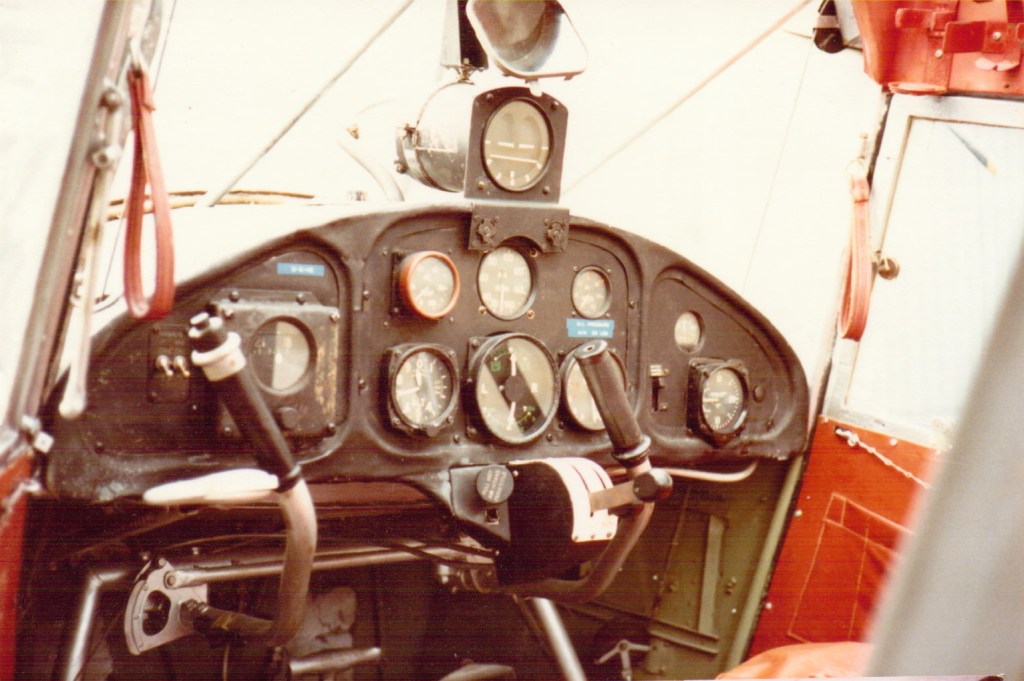
It was after dark when he found another airfield, this one being Sywell…. Opening the hangar doors he saw an Auster J1N, G-AHHP. He pulled the aircraft out, primed the engine and swung the prop, strapped himself in and taxied out into the dark. He could not see the instruments as there were no electrics. With no horizon he flew by feeling, when the controls went slack he released the back pressure realising that the speed was too slow.
He flew in the direction of the moon (which was in a southerly direction) for some ten minutes, then he decided it might be prudent to wait for morning. He landed in the half light of dusk and tried to sleep….Bryn had landed at Chase Farm near Yardley Hastings, eight miles south southeast of Northampton….At first light he took off a second time flying south again. However he had to make another landing to ask a lorry driver for directions….After that his next flight took him over a fledgling Heathrow (when it was in its infancy days) and then south again onto Beachy Head.
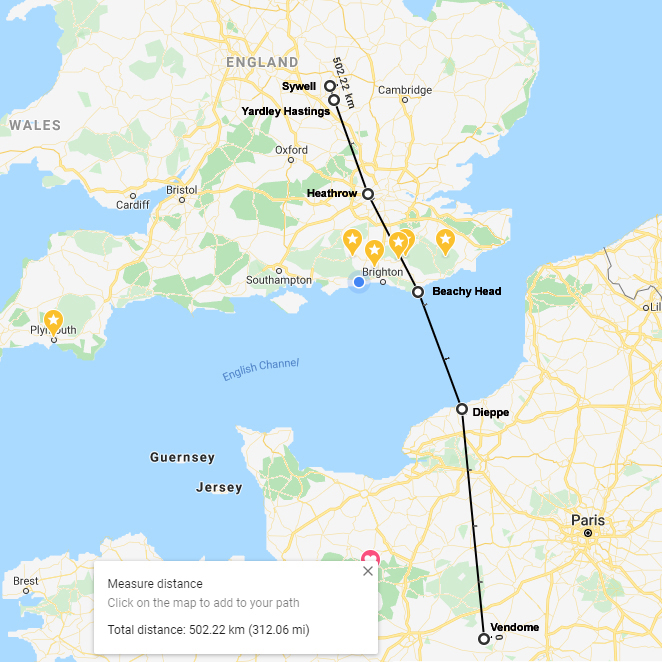
Having crossed the English Channel he landed in a field in northern France, asking again for directions he found he was near Dieppe. He made one more landing in a French field to relieve himself before his final flight with G-AHHP was up, that final journey found him near the village of Vendome, not far from Orleans where he landed and dinged the prop.
He had covered a distance of approximately 300 miles. Making four landings and managed to walk away from all of them. A good result, even for some, that are holders of a private pilots licence.
The French were not sure what to do with him, he had committed no offence in France, he had simply run low on fuel.
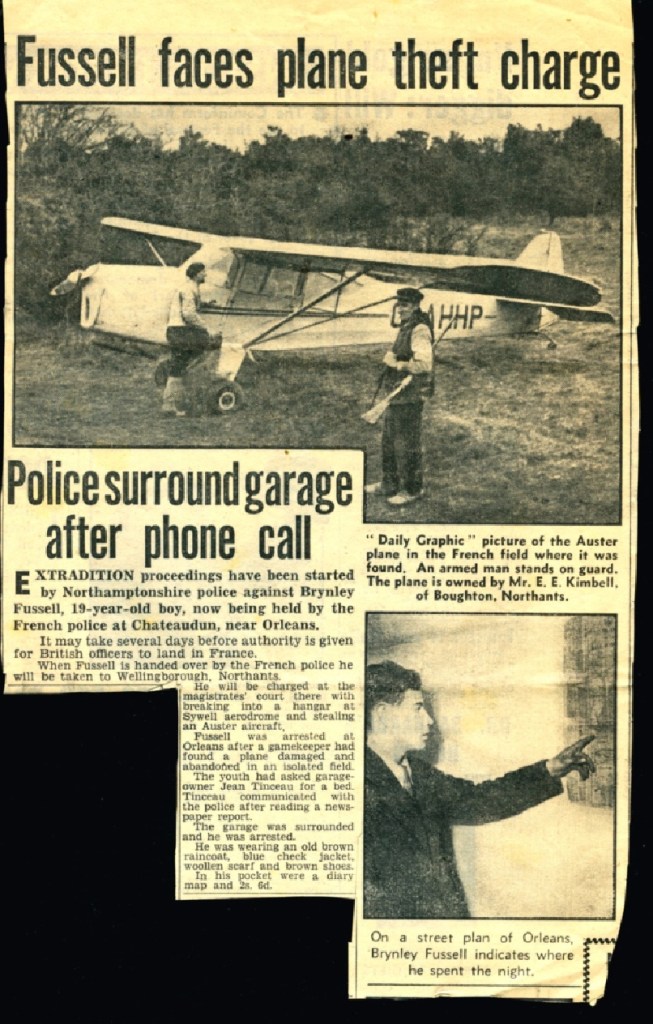
Back in Britain he was sentenced to a further 21 months in jail, where he finally decided to become a co-operative prisoner and found the Bahai faith. When he was released he married, settled down and had a family.
Bryn later joined the British Microlight Aircraft Association and in 1981 he went to Haverfordwest for a lesson on a flexwing Eagle 215B. He became an Inspector and Check Pilot and was seconded to the Irish Aviation Authority to inspect Irish-registered microlights; he initiated the formation of an Inspectorate for the National Microlight Association of Ireland. He has owned an American Aerolights Eagle and a Vector 627, and he qualified as a pilot officially when legislation was introduced in the 1980s that required people to do so, passing his GFT in 1988, almost forty years after his first solo.
Our association with G-AHHP was unfortunately to be very short…The three of us shared ownership of the little Auster and we all flew it for about six months in 1985. During that time it was registered as G-SIME not G-AHHP. It was a very nice aircraft to fly, of course all of us held licences and many hours on tail-wheel aircraft. When we owned the aircraft it had an auxiliary fuel tank under its belly, but the newspaper clip does not appear to show one under the belly. This could have got him further down through France.
I flew the aircraft regularly, including one memorable flight back to Sussex from Shipdham in Norfolk.
I had flown the aircraft up to Shipdham for an annual check which was planned to be done over two days. As is always it took three days and we had been unable to find an engineer to swing the new compass. I had to be back to work the following day and also the forecast was not good, so an agreement was made that I would get the compass swung back in Sussex.
I rang Jim and discussed the flight back with no compass and also no radio, the reason for no radio is that it didn’t have one. Jim told me he was spraying a farm near Partridge Green and I could land there and then help with loading his Piper Pawnee with Colin. “Ah” he said “do not touch down before the clump of trees as there is a slight ridge across the landing area” Ok got that.
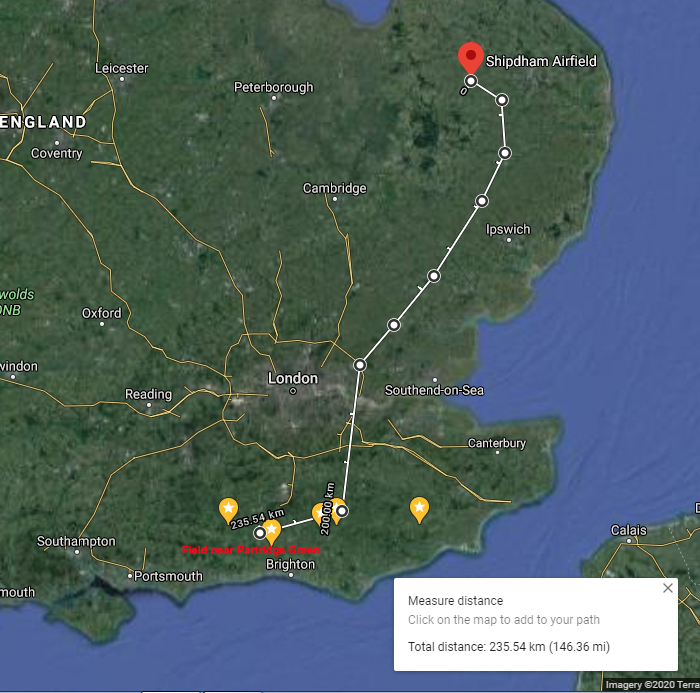
I took off from runway 21, once airborne I used the runway heading as a form of fixed compass and I started to track south east picking a point on the horizon to stay on course. I had to pick up a railway line that came out of the town of Dereham, which lies to the north of Shipdham. That railway line would take me to the town of Wymondham, which in turn had a railway out of Norwich that would take me south avoiding the big Air bases of Mildenhall and Honington. Following that line for 18 nm and then pick up a spur line to Bury St Edmunds, at Bury I turned south toward Earls Colne and Chelmsford and picking up the A12 road. The A12 is easily identified as it closely follows the railway line out of Colchester.
That led me to the M25 and the Crossing of the Thames at the QueenElizabeth Bridge. I could then see the highest bit of ground that laid south of that position. That is Crowborough and it ensures you don’t tackle with the big boys at Gatwick.
From Crowborough it was all home territory past Uckfield, Haywards Heath and Cowfold. The field that Jim was operating out of is located west of Cowfold before Buck Barn and the A 24. It was just south of the A272 stretch between Cowfold and Buck Barn.
I found the field and saw Jim being loaded, so I waited for him to take off then made my approach, I could see that the field was quite a good size but that the clump of trees restricted the ground run if I was to avoid that ridge. I came in with the speed back but with a bit of power on to stop me touching down early. Blimey I thought this looks a bit tight. Touching down I proceeded in applying brakes first left brake then right brake, taking the little Auster far into the corner of the field. I turned around and taxied back to where Colin had been hiding behind the truck when he saw me arrive. “Heck” he said “that was tight” I agreed that it was kind of interesting.
When Jim landed back he had seen my braking marks on the field during my landing run. He looked at me and said, “Why did you touch down so late” I replied, “You said don’t touch down till you get to the clump of trees” Jim looked back down the field and said “Not that clump of trees, I meant the other clump of trees over there.
It was all done using IFR. I Follow Roads, Railways and Rivers.
In November of 1985 the Auster was blown onto a barn roof during a gale whilst it was parked up and tied down at Cornish Farm, off Beachy Head. So ironically G-SIME met its fate at Beachy Head. The very place Bryn departed British soil in 1950.
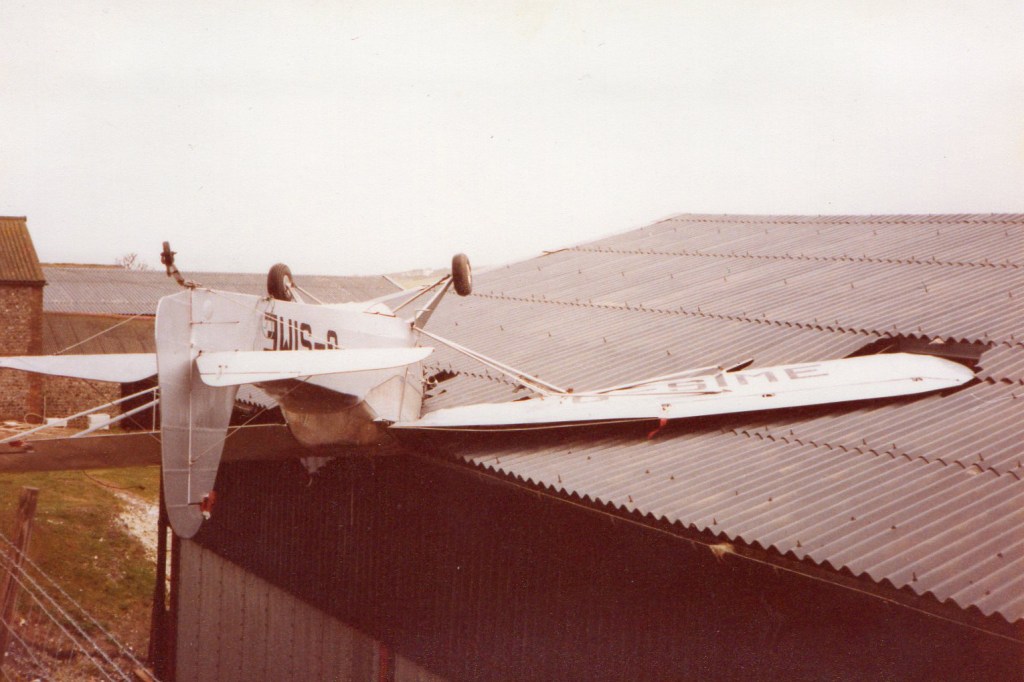
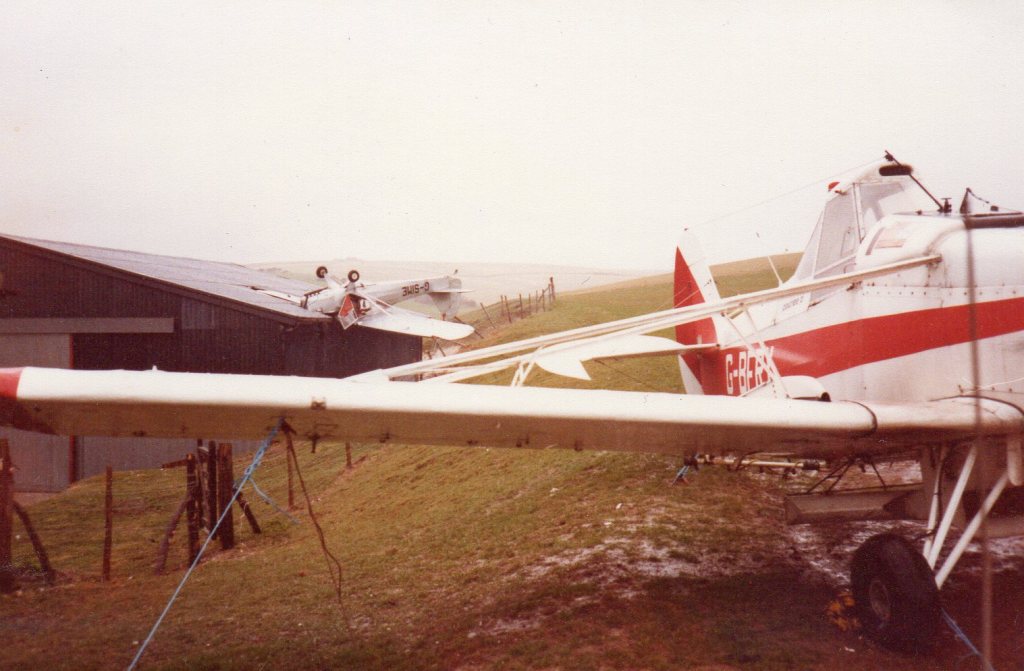
We sold the battered airframe on to a David Hutchenson who was going to restore it. David did get the original registration back but alas it was never restored until I started this article and found out that The South Yorkshire Aircraft Museum currently have work in progress and have it on it’s wheels again after all these years.
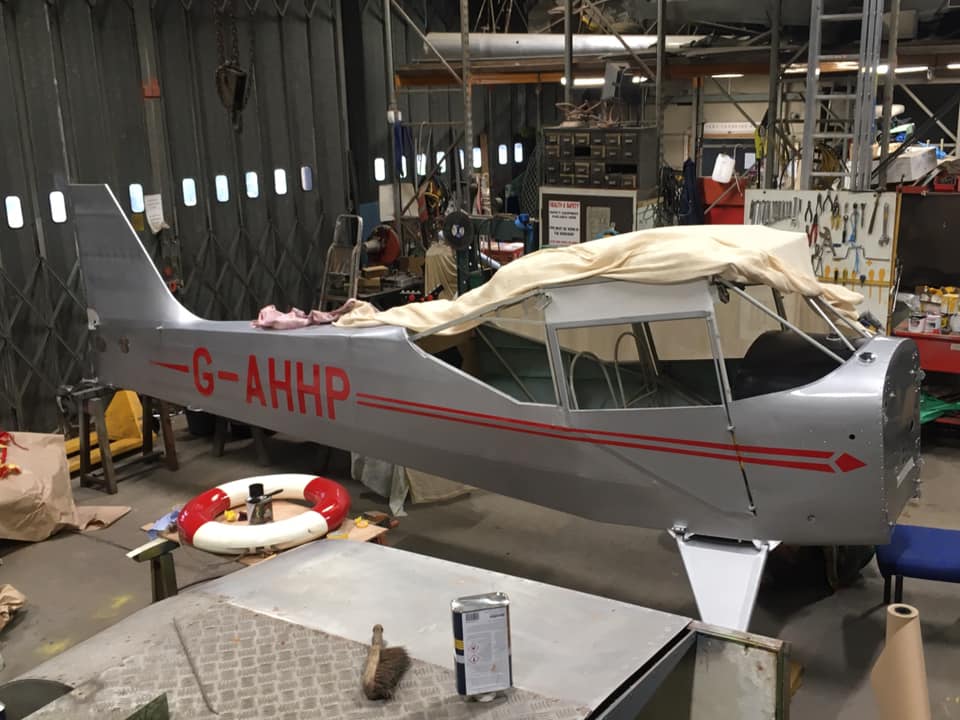
How strange that this story about that aircraft’s early history should become apparent on the day of Jim’s funeral and that the appearance at Sywell museum of ‘Bryn Fussell’ should be put on Facebook at the same time as my friend Jim was laid to rest.
I would like to thank http://www.pilotweb.aero/ and The South Yorkshire Aircraft Museum for allowing me to use some of the wording in this piece.


 ONLYVFR
Leave a comment